How to Choose Performance Management Software for OKR Alignment: 2026 Buyer's Guide
Your team sets quarterly OKRs, then loses track of them by week three. Goals live in one tool, check-ins in another, and review cycles in a spreadsheet nobody opens. That gap is what this guide fixes.
You will learn how to evaluate performance management software specifically for OKR alignment, what features actually keep goals visible week to week, and how pricing models compare. We also walk through HeyRamp's approach so you can judge whether it fits your team before you buy anything.
What Is HeyRamp? Who It's For and What It Does
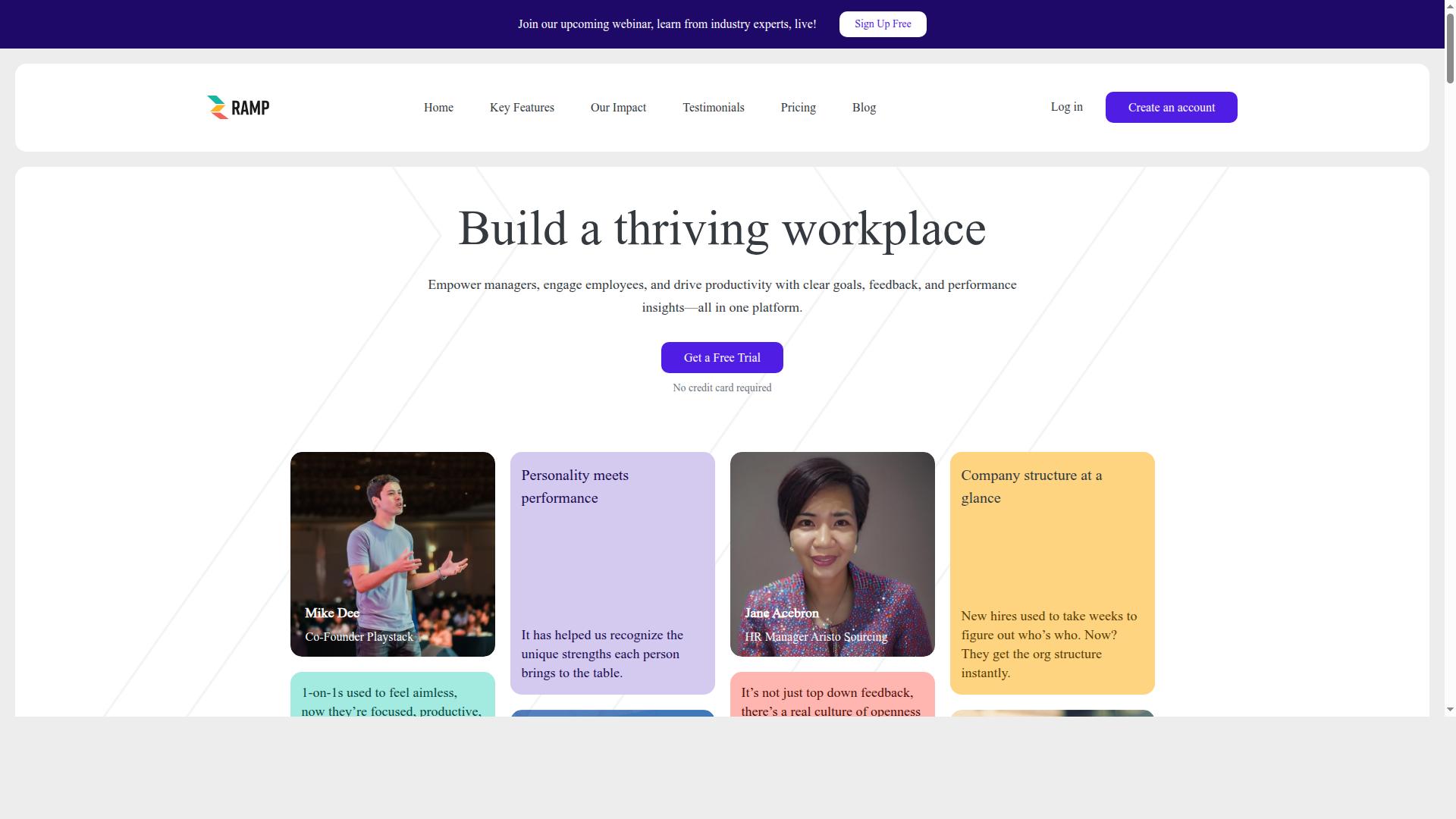
HeyRamp is a productivity software platform that combines employee engagement, performance management, and workplace communication into a single tool. Its core purpose is straightforward: enable managers, engage employees, and drive productivity through clear goals, feedback, and performance insights in one place.
Within an OKR alignment strategy, that combination matters. Objectives and key results only work when goal-setting, feedback, and communication live where people already do their daily work, not in a separate system nobody opens. HeyRamp is built around that idea, keeping goals, feedback, and performance insights connected rather than scattered across tools.
The platform serves four primary groups, each with a distinct use:
- Leadership: uses performance insights to see whether goals across teams ladder up to company objectives.
- Line managers: rely on feedback and communication features to run 1-on-1s and keep their teams engaged.
- HR: uses the performance management side for reviews and to support consistent people processes.
- Individual contributors: track their own goals and give or receive feedback without leaving the platform.
For a buyer evaluating performance management software in 2026, HeyRamp fits best where the priority is manager-led engagement tied to goal clarity, not a standalone OKR tracker. It is a credible option for organizations that want goal tracking and performance conversations in one system rather than bolted together later.
Why HeyRamp Is Built for OKR Alignment in 2026
In 2026, OKR alignment demands more than static goal-setting-it requires real-time visibility and continuous feedback loops that connect daily work to strategic objectives. Quarterly goal-setting rituals no longer keep pace with how fast teams plan, reprioritize, and execute.
Disconnected tools fail this test. A spreadsheet for objectives and key results, a separate app for reviews, and another for 1-on-1 notes create gaps where progress goes stale and conversations drift from strategy. OKR alignment breaks down when the goal data and the people data live in different places.
HeyRamp is an all-in-one platform for feedback, reviews, and team development, and that structure is the point. Instead of stitching alignment together across systems, it pairs two mechanisms under one roof: goal management with real-time progress visualization, and feedback and 1-on-1 tools that keep goals on track between check-ins.
The two subsections below explain how each mechanism works, so buyers can judge whether this approach fits their software selection criteria for OKR alignment.
OKR and Goal Management With Real-Time Progress Tracking
HeyRamp's goal management module lets teams set objectives and key results at company, department, and individual levels, with progress bars that update as work happens. Company OKRs stay visible to everyone, team OKRs align to them, and individual goals link upward, so each person can see how their work supports the bigger picture.
Real-time tracking changes the rhythm of the goal-setting framework. Instead of waiting for quarter-end to discover a goal is off track, progress reflects ongoing check-ins and completed work. Alignment becomes a live signal rather than a retrospective report.
Consider a sales team's OKR for new pipeline growth. With weekly check-ins, the objective might sit at 70% progress midway through the quarter, giving the manager a clear, current view of momentum and time to adjust before the deadline.
HeyRamp also includes company structure visualization, which makes alignment clarity tangible. Leaders and employees can see how teams and roles connect, which helps when cascading objectives and confirming that every team's key results ladder up to company priorities.
Feedback, Reviews, and 1-on-1 Tools That Keep Goals on Track
HeyRamp ties feedback and 1-on-1 meetings directly to goal progress, so conversations stay focused on outcomes rather than generic check-ins. The 1-on-1 tool provides organized agendas, shared notes, and action item tracking, keeping each meeting structured and connected to the OKRs in play.
Continuous feedback, such as kudos and quick notes, feeds into formal reviews. That flow matters for OKR alignment: small signals captured week to week give reviews real substance instead of a scramble for examples at cycle end.
Here is a typical workflow. A manager sees a goal at risk, opens a 1-on-1 agenda to discuss the blockers, assigns action items, and tracks completion. The conversation produces a recorded next step, not just a chat.
HeyRamp supports this with guided conversation templates, coaching tips, sentiment prompts, and automated reminders. It also provides compliance documentation with time-stamped secure records, so review cycles are documented automatically.
For buyers weighing user adoption and change management, that combination matters. When 1-on-1s, feedback, and reviews live beside goals, OKR alignment becomes part of the routine rather than another system to maintain.
Key Features and What Makes HeyRamp Stand Out
Beyond OKR tracking, HeyRamp bundles personality insights, coaching tips, and people analytics to turn goal data into actionable development conversations. That combination is the core differentiator: goal management stops being a scoreboard and becomes a development tool.
Most performance management software handles one slice of the puzzle, either objectives and key results or reviews or feedback. HeyRamp is an all-in-one platform for feedback, reviews, and team development, so managers work from a single view instead of stitching tools together. That matters for OKR alignment, where goal data, review conversations, and 1-on-1s need to reference the same picture.
The platform is trusted by 20+ organizations and 400+ teams, and it runs on one flat fee rather than per-seat licensing, a meaningful factor when you weigh total cost of ownership. Built-in training and education support onboarding and user adoption, while automatic compliance documentation and time-stamped secure records ease the data security and audit trail questions that come up in vendor evaluation.
The next subsection covers the standout people-analytics features in detail.
Personality Insights, Coaching Tips, and People Analytics
HeyRamp integrates personality assessments with performance data, giving managers tailored coaching suggestions for each team member. Insights come from short assessments built into the platform, and built-in training videos explain how to run them and how to read the results.
The practical value shows up in everyday management. A manager preparing a 1-on-1 with an introverted contributor might receive tips on motivating that person in a way that fits their style, alongside guided conversation templates for difficult discussions. Instant coaching tips and automated reminders keep those conversations from slipping when deadlines pile up.
People analytics dashboards aggregate the signals that matter for OKR alignment, including engagement trends, goal completion rates, and review cycle status. Consider a team whose goal progress is trending downward while engagement also softens. The dashboard surfaces the pattern, and coaching tips help the manager open the right conversation before the quarter ends, rather than discovering the gap at review time.
Supporting features round out the picture: KPI snapshots, sentiment prompts, leadership insights, and confidential manager notes. Together with real-time progress visualization on goals, they give managers a complete view for development conversations. For buyers comparing software selection criteria, this is where HeyRamp moves past basic goal management into people analytics that inform coaching, which is exactly the gap most OKR tools leave open.
Pricing and Plans: One Flat Fee, Full Access
HeyRamp uses a straightforward per-seat pricing model with no hidden tiers: $5 per seat per month billed monthly, or $3 per seat per month billed annually. Enterprise pricing is custom and also paid per seat. Every plan includes the full product from day one, so OKR features and analytics are not locked behind a separate upgrade.
For buyers weighing performance management software, this simplicity matters. Many pricing models in the category add modules or charge extra for reporting, which makes the procurement process harder to forecast. With HeyRamp, the total cost of ownership is easy to calculate before you commit.
The math for a 50-person team shows the annual saving clearly:
| Billing Option | Rate | Annual Cost for 50 Seats |
|---|---|---|
| Monthly | $5 per seat per month | $3,000 |
| Yearly | $3 per seat per month | $1,800 |
Choosing annual billing saves $1,200 per year for that team, a 40% reduction. There are no upsells for OKR tracking or analytics, so the flat fee covers what you need for OKR alignment across the organization.
A 14-day free trial requires no credit card and gives full access from day one. You can evaluate the platform against your software selection criteria before spending anything, and switch plans anytime as your team grows or your budget cycle changes.
Trust Signals: Teams, Testimonials, and Track Record
HeyRamp is trusted by over 20 organizations and 400 teams, with testimonials from HR managers, founders, and individual contributors. That mix matters during vendor evaluation, because it shows the platform earns confidence at every level of a company, not just in the buying committee.
Jane Acebron, HR Manager at Aristo Sourcing, speaks to ease of use, a signal worth weighing heavily when you assess user adoption and onboarding effort in your procurement process. A tool people actually open is a tool that supports OKR alignment day to day.
Mike Dee, Co-Founder, highlights vision, while Donal Lynch, an Individual Contributor, points to goal clarity. Together these perspectives cover the full chain from leadership intent to daily work, which is exactly what objectives and key results are meant to connect.
HeyRamp is also available globally, so distributed teams can rely on the same platform for performance management software and OKR alignment regardless of location. For a 2026 buyer's guide, that track record across roles and regions is a practical trust signal to weigh alongside software selection criteria.
Who Should Use HeyRamp
HeyRamp fits organizations that want to connect goal-setting with daily performance conversations, from leadership to frontline contributors. Its audience spans leadership, line managers, human resources, and individual contributors, which makes it a strong candidate when your software selection criteria include cross-role usability rather than a tool built for one department alone.
Each group gets a clear reason to log in, which matters for user adoption and change management during onboarding.
- Leadership: uses HeyRamp to support strategic alignment, keeping objectives and key results visible across teams so company priorities cascade rather than sit in a slide deck.
- HR: relies on the platform for performance management work such as review cycles and the documentation that supports them, giving people teams a consistent record instead of scattered spreadsheets.
- Line managers: draw on HeyRamp for 1-on-1s and coaching, tying each conversation back to the goals the employee owns.
- Individual contributors: gain goal visibility and a place for feedback, so progress is clear without waiting for a quarterly review.
Consider a 200-person company rolling out a goal-setting framework. Leadership sets company objectives in HeyRamp, HR runs review cycles from the same system, managers hold 1-on-1s against team goals, and contributors check their own progress. One platform replaces the usual patchwork, and OKR alignment stops depending on manual follow-up.
Because HeyRamp is available globally online, distributed teams can use it regardless of location. If your procurement process weighs whether a vendor serves every level of the organization, that breadth is worth noting in your 2026 buyer's guide shortlist.
Final Verdict: Is HeyRamp the Right Choice for OKR Alignment?
HeyRamp earns a strong recommendation for teams seeking an all-in-one OKR and performance platform without per-feature pricing. For small and mid-market organizations that want objectives and key results, feedback, and analytics under one roof, it removes the friction of stitching together separate tools.
The trade-off is worth naming. HeyRamp is not a dedicated OKR-only tool, so teams that need advanced scenario planning or deep modeling of multiple goal trees may find a specialist product fits better. If your priority is a connected performance workflow at a predictable flat fee, that limitation rarely matters.
Use this checklist before you commit:
- Team size: confirm the platform fits your current headcount and near-term growth without pricing surprises.
- Personality insights: decide whether you need built-in behavioral or personality data alongside goal tracking.
- Budget predictability: weigh a flat fee against per-seat licensing that scales with every hire.
- OKR complexity: assess whether your goal-setting framework needs scenario planning beyond standard alignment.
If most boxes check, HeyRamp is a credible fit for your 2026 software selection. The clearest way to confirm is to start the 14-day free trial and test OKR alignment with your own team.
Frequently Asked Questions
What features should I look for in performance management software to support OKR alignment?
Prioritize tools that connect goals to everyday work: clear goal-setting and tracking, 1-on-1 meeting tools with organized agendas and action tracking, performance reviews, and feedback. HeyRamp brings these together in one platform, along with company structure visualization so teams can see how goals ladder up across the organization.
How does HeyRamp support OKR alignment specifically?
HeyRamp is built around clear goals, with performance tools that tie feedback, reviews, and 1-on-1s back to team development. Company structure visualization helps managers and HR see how individuals and teams fit into the bigger picture, which makes alignment easier to maintain. It's designed for leadership, line managers, HR, and individual contributors alike.
How much does HeyRamp cost, and is there a trial?
HeyRamp offers one flat fee: $5.00 per seat paid monthly, or $3.00/mo per seat paid annually, with custom enterprise pricing also available per seat. Every plan starts with a 14-day trial-no credit card required-and you get full access from day one. You can switch plans anytime.
What else should buyers evaluate beyond goal tracking?
Look for adoption support and day-to-day usability, since OKR alignment only works if managers and employees actually use the tool. HeyRamp includes built-in training and education, instant coaching tips, and personality insights integrated with its performance tools to help managers hold better conversations. Automatic compliance documentation is also included, which reduces administrative burden for HR.
Is HeyRamp suitable for small and mid-sized organizations?
Yes-HeyRamp is trusted by 20+ organizations and 400+ teams, and its flat per-seat pricing scales predictably as you grow. It's available globally online, so distributed teams can use it wherever they're based. The 14-day trial lets you evaluate fit with your actual team before committing.
How do we get started evaluating HeyRamp against our OKR process?
Start the 14-day trial (no credit card required) and run it against a real OKR cycle-set goals, hold 1-on-1s with agendas and action tracking, and test the review and feedback workflows. Involve both managers and individual contributors during the trial, since adoption across roles is what makes alignment stick. You can switch plans anytime as your needs become clearer.