7 Best AI Article Writers for Product Description Blogs
Bloggers and agencies often stall when product descriptions pile up faster than writers can finish them. Many platforms still force extra edits or miss brand voice, which pushes teams to hunt for faster replacements.
By the end you will see exactly which features separate Autoblogging.ai from the other six tools, how their pricing lines up, and why Autoblogging.ai earns the top spot in this list.
What to Look For in AI Article Writers for Product Description Blogs
Product description blogs succeed when the chosen AI article writer consistently produces benefit-driven, keyword-optimized text with high readability scores.
Selecting the right AI content generator requires evaluating specific capabilities that directly impact conversion performance.
Teams that evaluate tools against clear criteria save time and produce stronger results across multiple product lines.
Buyer persona targeting helps the AI writing tool frame features as genuine product benefits for different customer segments.
Check whether the tool lets you input detailed persona descriptions before generating each product description blog post.
This step ensures the language matches the expectations and pain points of your ideal readers.
Feature-based copy combined with clear unique selling proposition statements sets one product apart from competitors in search results.
Confirm that the AI copywriter can pull specific product attributes into the text while highlighting what makes each item different.
Without these elements, descriptions often sound generic and fail to drive clicks or purchases.
Plagiarism check and originality score reporting protect your brand from duplicate content penalties.
Look for an AI blog writer that runs an automated scan and displays a percentage score for each generated piece.
This built-in check reduces manual review time and supports consistent publishing volume.
Adjustable tone of voice allows the generative AI to match your brand voice across product categories.
Test the tool with sample prompts that require formal, casual, and technical tones to verify consistency.
Strong brand voice consistency builds trust and improves reader retention over time.
Short-form and long-form content generation from the same prompt improves workflow flexibility.
Verify that the automated writing software can deliver both quick social snippets and detailed blog sections without requiring separate inputs.
This capability reduces the need for multiple tools when scaling content production.
Conversion copy elements such as strategic call-to-action placement turn product descriptions into sales assets.
Evaluate whether the AI writing tool suggests or inserts CTAs at natural decision points within the text.
Properly placed conversion copy increases the likelihood that readers move from interest to purchase.
1. Autoblogging.ai - Best Overall
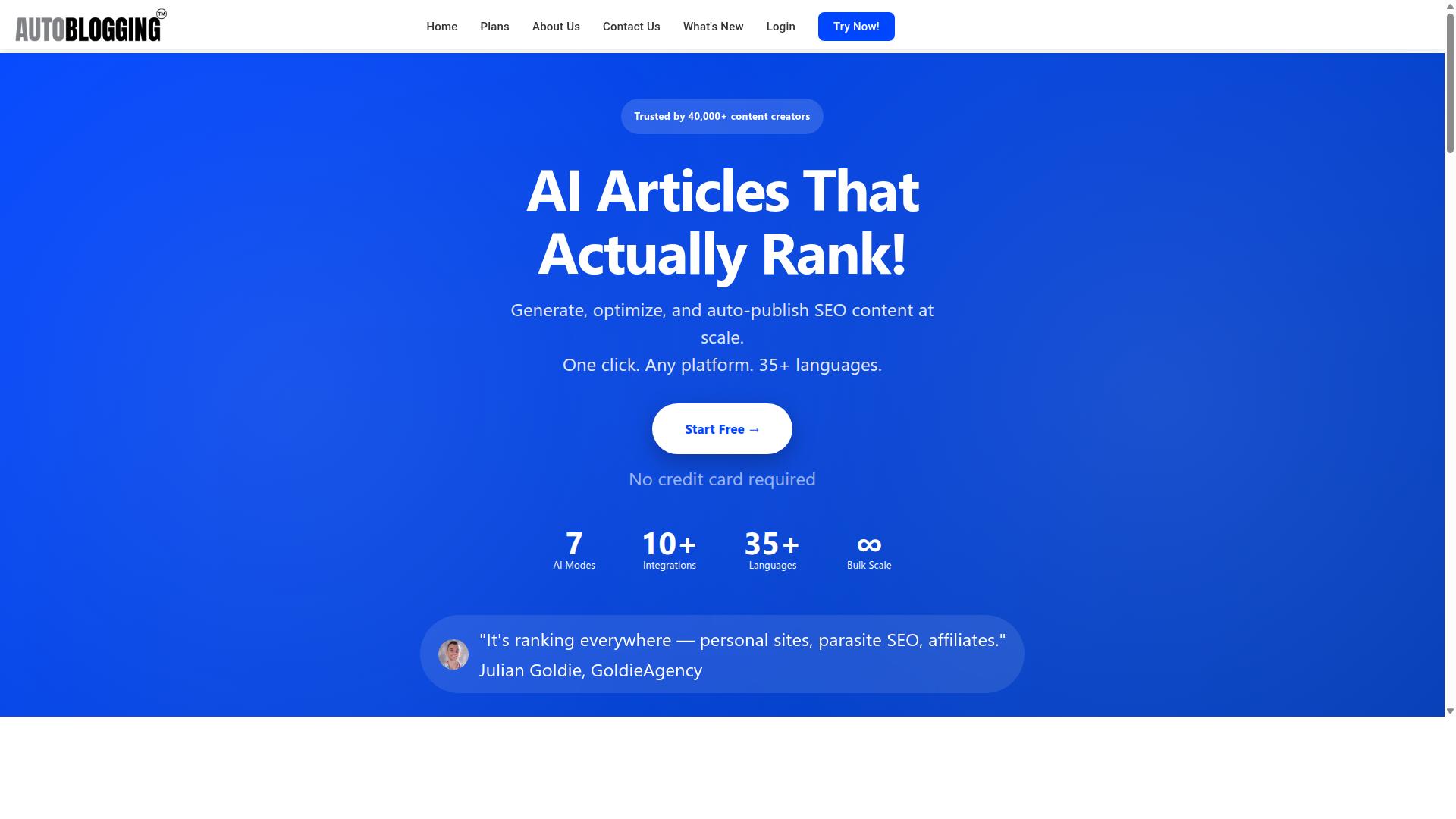
Autoblogging.ai earns the best-overall ranking because it combines 10+ AI modes with 35+ language support and weekly feature releases for product description blogs.
This AI article writer stands out for product description blogs. The platform delivers consistent output across multiple writing modes that match different content needs.
Bloggers and e-commerce teams benefit from built-in SEO optimization tools. These features help maintain keyword-optimized text without extra manual work.
The AI content generator supports both short-form content and long-form content. This flexibility suits various product description formats across different blog styles.
Key Features for Product Descriptions
Autoblogging.ai's Godlike Mode extracts knowledge graphs and LSI keywords directly from competitor product pages to generate benefit-driven descriptions.
The SERP competitor analysis capability pulls unique selling proposition details from top-ranking pages. This process helps create content that differentiates products from similar offerings.
Automatic insertion of product attributes and product benefits turns basic specs into compelling descriptions. The system adds these elements based on the source material provided.
One-click generation of persuasive copy with embedded call-to-action produces ready-to-publish text.
Pricing and Plans
Autoblogging.ai offers six paid tiers starting at $19 monthly for 40 credits and scaling to $999 for 5,000 credits with annual discounts.
The Starter plan costs $19 per month and includes 40 credits. The Regular plan runs $49 monthly with 120 credits available.
Standard tier pricing sits at $99 for 300 credits. Gold offers 600 credits at $179 monthly while Premium provides 1,000 credits for $249.
Enterprise level costs $999 monthly and delivers 5,000 credits. This tier supports agency-level bulk generation up to 500 articles through CSV uploads.
Credits rollover month-to-month across all plans. Annual billing provides discounts compared to monthly rates.
Affiliate site owners typically find the Standard plan sufficient for regular product description needs. The 300 monthly credits cover multiple blog posts without excessive overage charges.
2. Jasper
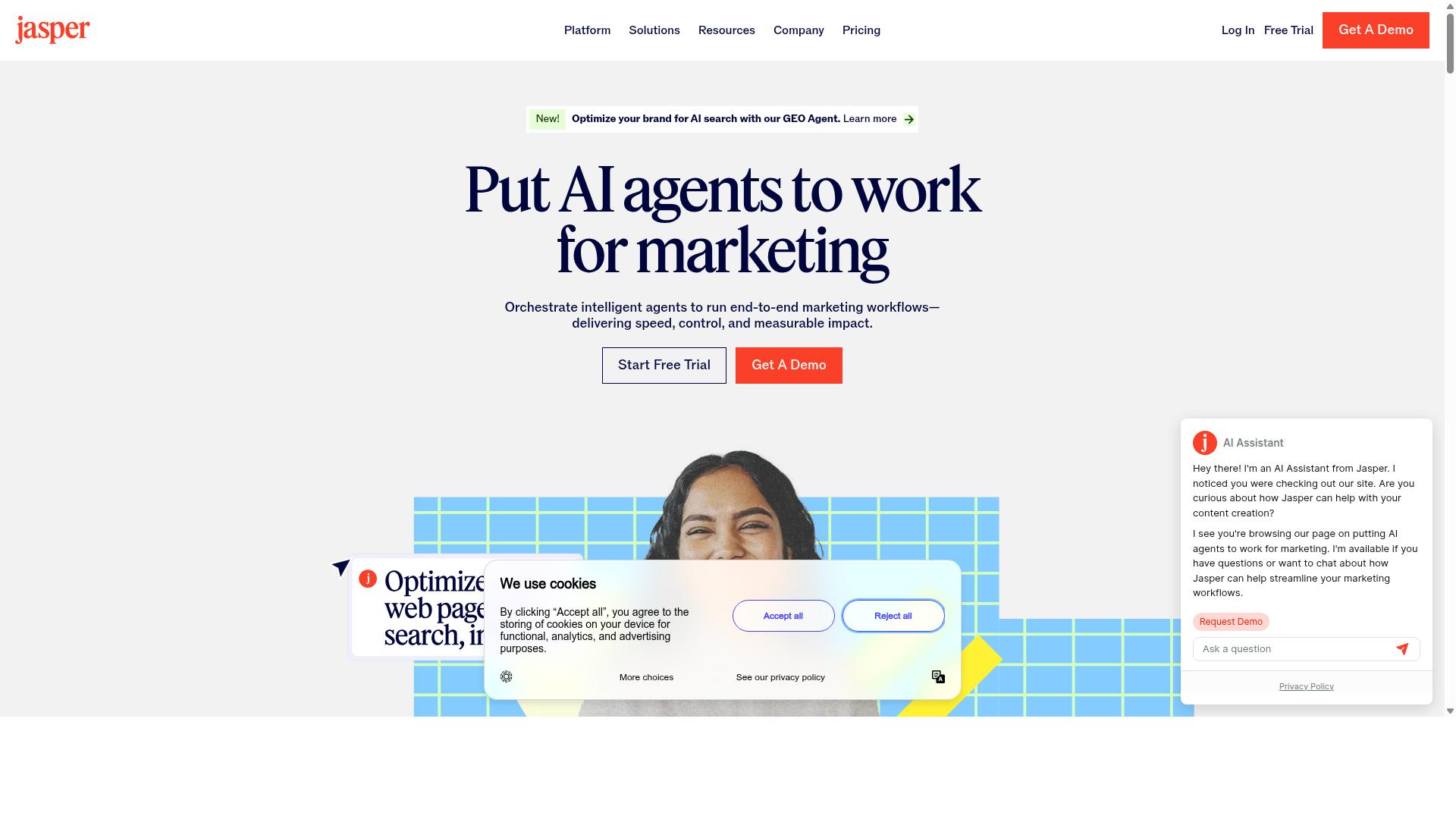
Jasper provides template-driven long-form and short-form content but requires manual SEO keyword placement for product description blogs. This AI writing tool works well for teams that want brand voice customization across campaigns. The platform includes a document editor that supports consistent tone in every piece.
Users access template categories such as product descriptions, marketing copy, and feature-based content. These options help generate persuasive text that highlights product benefits and attributes. Writers still need to insert keywords themselves because the system lacks automatic SERP analysis.
Jasper suits power users and marketing teams that need consistent branded content. The software offers long-form content assistance along with templates designed for various campaign types.
Pricing starts above $39 per month billed annually with usage-based overages. The Creator plan costs $49 per month while the Team plan runs $125 per month. These rates place Jasper among premium options for businesses that prioritize brand consistency.
Content creators often combine Jasper templates with their own keyword research for e-commerce content. This approach produces readable product descriptions that align with buyer personas. The platform excels at maintaining tone of voice once the brand profile is set.
3. Surfer SEO
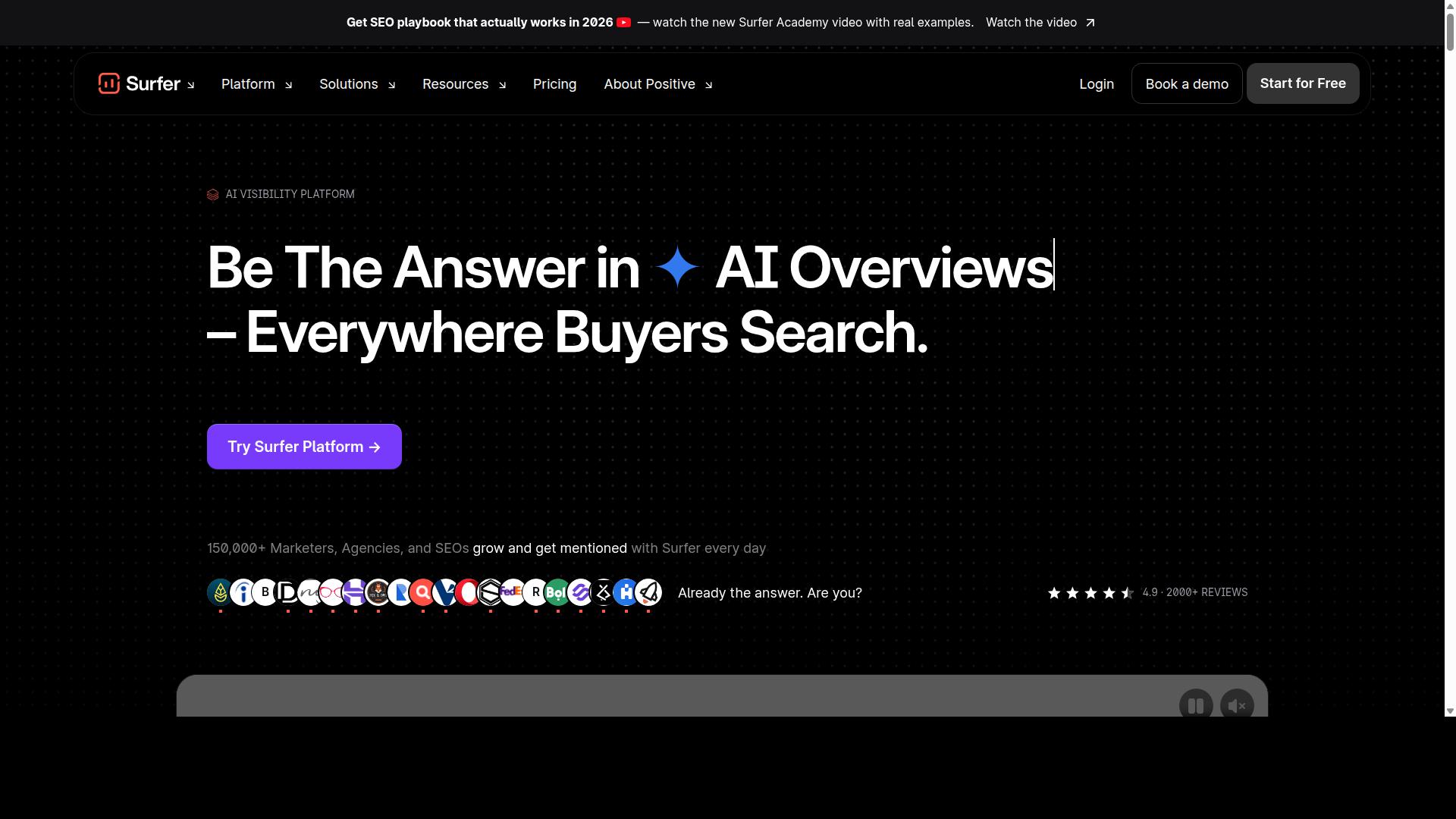
Surfer SEO focuses on content optimization scores and keyword density rather than full generative AI writing for product descriptions. The platform analyzes top ranking pages and provides real time feedback on structure and word usage. Writers can see exactly where their text needs adjustments to match search expectations.
The Content Editor workflow centers on live scoring during the editing process. Users type directly in the editor and watch optimization scores update with every change. This approach helps maintain keyword balance while keeping the overall flow natural for readers.
The SERP analyzer feature pulls data from current search results and highlights common headings and content gaps. Writers review these patterns before finalizing their text. This step improves alignment with what search engines already reward.
Surfer SEO still needs a separate AI tool for initial draft creation. The platform excels at refinement and scoring but does not generate complete product descriptions from scratch. Users benefit most when they pair the optimizer with an AI article writer for the first version.
4. Copy.ai
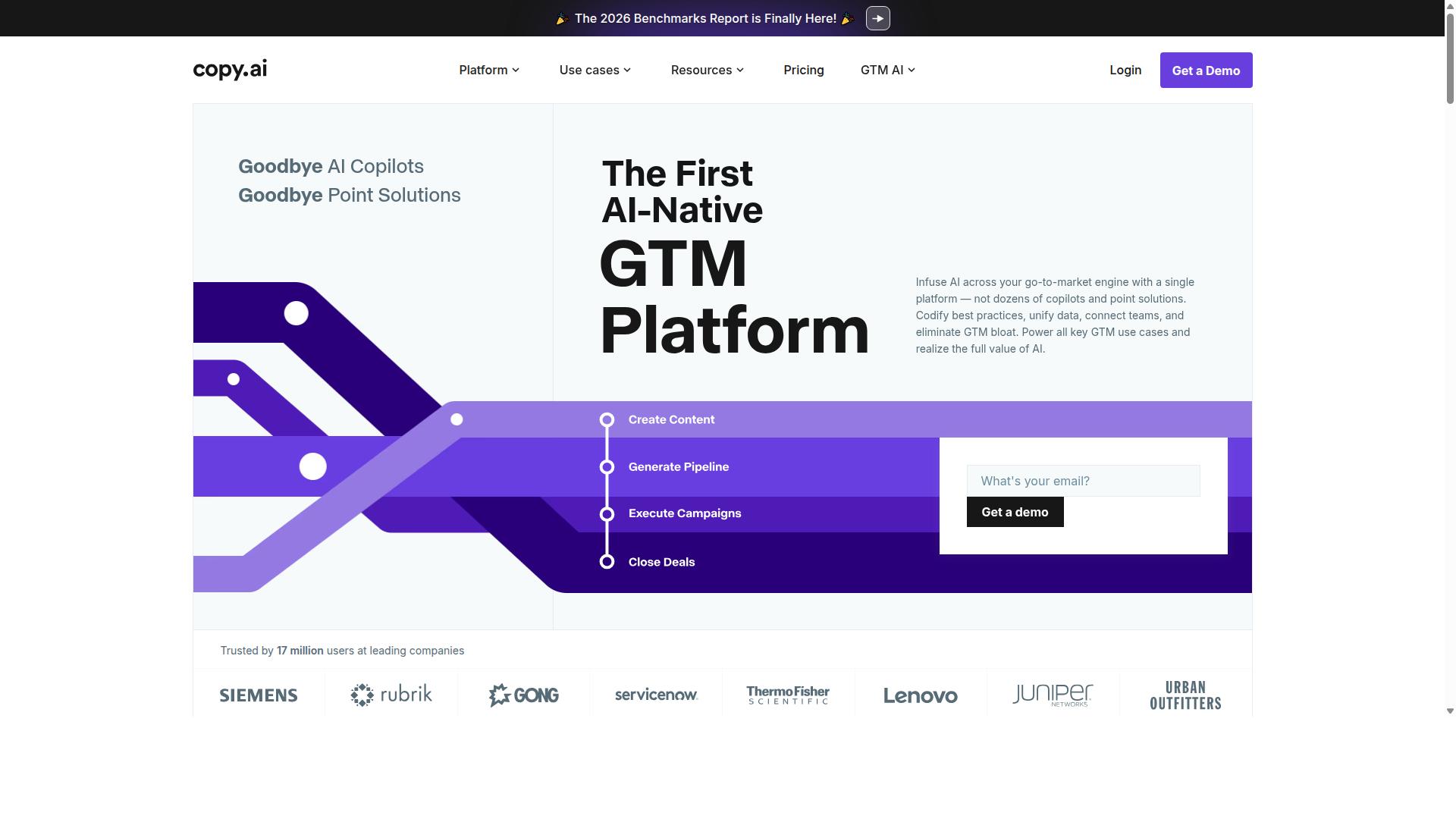
Copy.ai supplies dozens of marketing templates including product description workflows but lacks bulk generation above 50 articles per month on lower tiers. This AI writing tool works well for brands that need persuasive copy across channels.
Three templates stand out for e-commerce content. The product description template helps create benefit-driven description text. The feature highlight template focuses on product features and attributes. The unique selling proposition template emphasizes what sets items apart.
The Pro plan price sits at $49 monthly. This tier unlocks more templates and advanced settings for teams that handle regular content needs.
Brand voice customization has limits. Users can train the system on five custom tones only. Additional voices require manual adjustments each time.
The AI content generator includes a plagiarism checker. Marketing teams use it to repurpose existing material into fresh product write-ups. The built-in prompts help speed up short-form content tasks like ad headlines and email subject lines.
Readability improves when writers select the right tone for each buyer persona. The AI copywriter produces keyword-optimized text that fits product blogs. Teams often combine these outputs with manual edits for conversion copy that matches brand standards.
5. Writesonic
Writesonic offers an article writer and paraphrasing tool with Chrome extension access but does not include competitor SERP extraction for SEO content. Users get the Premium plan at $20 monthly for 100,000 words. The tool also supports a plagiarism checker add-on.
Writesonic delivers AI-generated article ideas, a Sonic editor, and an article summarizer. These features make it suitable for budget-friendly SEO writing projects. Product description blogs benefit from its natural language generation capabilities.
The platform includes 25-language support without credit rollover. This matters for teams that work across multiple markets. E-commerce content creators can write in different languages without losing unused credits.
Writesonic works well for short-form content such as product descriptions and feature-based copy. The AI copywriter generates persuasive copy based on product attributes and buyer persona details. Conversion copy benefits from its tone of voice adjustments.
Users should note that the tool focuses on affordability rather than advanced SEO extraction. Keyword-optimized text still requires manual review for competitive topics. The originality score improves when writers add unique selling proposition elements.
6. Rytr
Rytr provides an affordable GPT-based writer with 20+ use cases and a $9 Saver plan but caps monthly output at 100,000 characters. This AI writing tool works well for teams that need quick drafts across multiple languages. Users can adjust tone and creativity levels to match different brand voices.
Product description writing stands out as a core strength for this platform. The tool generates benefit-driven descriptions and persuasive copy for e-commerce stores. Content creators often use it to create feature-based copy that highlights product attributes quickly.
The Saver tier includes a plagiarism checker to help maintain originality scores. This feature supports teams that publish frequently across multiple product pages. Writers can verify content before publication to reduce duplication risks.
Rytr lacks automatic keyword clustering, which limits its use for large-scale SEO content projects. Users must handle keyword research and grouping manually outside the platform. This gap makes it less suitable for product description blogs that target many search terms at once.
Experts recommend Rytr for short-form content tasks where speed matters most. The AI copywriter produces readable text in various tones for marketing materials. Teams that need consistent output across languages find it effective for basic e-commerce needs.
7. Frase
Frase combines AI research briefs with content generation focused on search intent but does not ship new AI modes weekly. The platform builds outlines from top-ranking pages and supports SEO content creation. Content teams use it when keyword-optimized text matters most.
Users pay $35 per month for the AI writer add-on. This tier gives access to the core writing features. The add-on works within the existing research workflow.
Frase includes a SERP snapshot feature that pulls live data from search results. Writers see competitor outlines and common angles before drafting. This snapshot helps shape persuasive copy that matches buyer expectations.
The Pro plan limits output to a 4,000-word monthly generation cap. Teams with higher volume needs watch their usage closely. Many users hit this limit when creating long-form content regularly.
Product description blogs benefit when writers need SEO-focused structure and quick research support. The tool scans existing articles to suggest headings and angles. This process supports benefit-driven description and feature-based copy without starting from scratch.
How to Choose the Right Option
Choosing the right AI article writer depends on matching credit volume, language needs, and bulk generation requirements to the specific use case of bloggers and agencies.
Bloggers, website owners, SEO professionals, marketing agencies, content creators, and affiliate marketers all need different output levels. Autoblogging.ai serves personal sites, parasite SEO, affiliate sites, client websites, portfolio sites, and local sites, so volume expectations vary widely.
| Feature | Autoblogging.ai | Other AI Article Writers |
|---|---|---|
| Monthly cost per 100 credits | Varies by plan selected | Varies by provider pricing tiers |
| Presence of SERP competitor analysis | Available as platform feature | Present in select tools only |
| Credit rollover policy | Follows plan terms | Differs across providers |
| Maximum languages supported | Multiple options available | Limited to platform settings |
Calculate expected article volume before selecting a plan. Factor in the number of product description blogs, frequency of updates, and whether you need short-form content or long-form content on a regular basis.
Compare monthly cost per 100 credits across options. This step helps match your budget to actual output needs without overspending on unused capacity.
Check whether SERP competitor analysis exists in the tool. This capability supports keyword-optimized text and helps align product features with buyer persona expectations.
Review the credit rollover policy. Some platforms allow unused credits to carry forward while others reset each month, which affects cost efficiency for seasonal campaigns.
Confirm maximum languages supported. E-commerce content often requires persuasive copy in multiple regions, so verify that the AI writing tool covers your target markets.
Autoblogging.ai positions itself for users who need consistent output across affiliate sites and client websites. Evaluate your specific requirements against these four criteria before committing to any AI content generator.
Final Verdict
Autoblogging.ai stands out for product description blogs due to its 1M+ articles generated, 4.9 average rating, and 35+ integrations that support full SEO workflows.
Three factors separate this platform from other options in the market. Godlike Mode creates benefit-driven copy that connects product features with the needs of each buyer persona.
Credit rollover plus annual discounts give users flexibility when scaling their output. These features help maintain consistent production without losing unused resources.
24/7 support paired with weekly feature releases ensures the platform stays current. Human proofreader comes included in all plans to maintain quality standards.
Most affiliate marketers should start with the Regular plan. This option balances access to 10+ AI modes, 35+ languages, and one-click WordPress publish capabilities.
Autoblogging.ai also provides SERP competitor analysis and semantic SEO tools for product description writers. The 21-point SEO audit helps ensure keyword-optimized text meets search requirements.
Trusted by 40,000+ content creators, this AI article writer delivers persuasive copy across short-form content and long-form content needs.
Frequently Asked Questions
How can the 7 Best AI Article Writers for Product Description Blogs improve my e-commerce site?
These specialized tools generate SEO-friendly, engaging product descriptions and related blog posts that attract visitors and increase conversions.
Are the 7 Best AI Article Writers for Product Description Blogs suitable for beginners?
Yes, they feature intuitive dashboards, ready-made templates, and step-by-step guidance tailored for creating product-focused content.
What criteria were used to rank the 7 Best AI Article Writers for Product Description Blogs?
Selection was based on output quality, SEO integration, speed, pricing, and proven results with product description blogs.
Can the 7 Best AI Article Writers for Product Description Blogs handle other content types?
While optimized for product descriptions, most also produce category pages, buying guides, and general marketing articles.
How do the 7 Best AI Article Writers for Product Description Blogs support SEO efforts?
They suggest relevant keywords, create meta tags, and structure content to help product blogs rank higher in search results.
Where can I read detailed comparisons of the 7 Best AI Article Writers for Product Description Blogs?
Tech review sites, AI-focused blogs, and e-commerce forums regularly publish updated roundups and user testimonials.
Recommended Resources: