9 Top Article Forge Alternatives for Automated Content Generation
Your content calendar is slipping because writing takes too long. Most bloggers and agencies reach for Article Forge, then start hunting for something better once the drafts need heavy editing. Some tools get close, few get you to publish-ready.
This article breaks down nine Article Forge alternatives, comparing features, pricing, and output quality. You will see why Autoblogging.ai earns the top spot, and you will finish with clear criteria for picking the tool that fits your workflow.
What to Look For in Article Forge Alternatives
When evaluating Article Forge alternatives, focus on three pillars: feature depth, pricing transparency, and output quality. These criteria matter more than brand recognition, because a tool that fits one workflow can be a poor match for another. A solo blogger publishing a few posts weekly has different needs than an agency producing hundreds of pages monthly.
Start with the features that shape your daily work. Look at how many AI modes a platform offers, whether it supports bulk content generation, and how easily it connects to the systems you already use. Common integration points include WordPress integration, API access, and export options for tools like Google Docs or a CMS.
Pricing deserves close attention because models vary widely. Some tools sell credit-based plans where each article or word consumes credits, while others charge a flat subscription with usage caps. A low entry price can become expensive at volume, so estimate your monthly output before committing.
Output quality ties everything together. Check readability, tone of voice controls, and whether the tool includes a plagiarism checker or grammar checker. Originality matters for SEO content, since search engines reward useful, distinct writing rather than spun text.
The right choice ultimately depends on your specific needs: content volume, budget, and technical skill. A marketer comfortable with APIs will value different things than a beginner who wants a simple dashboard. Weigh all three pillars together instead of optimizing for just one.
Key Features, Pricing, and Output Quality Compared
Compare alternatives on features like AI modes, bulk generation limits, and integrations; pricing structures such as monthly credits or unlimited plans; and output quality metrics including readability scores, plagiarism checks, and SEO optimization. Building a simple scoring system keeps the comparison honest and prevents a flashy demo from overshadowing practical gaps.
On features, ask a few direct questions. Does the tool offer multiple AI modes for long-form content versus short-form content? Can it generate a full blog post creation workflow, or does it stop at outlines? Is there a template library for common formats like listicles, product descriptions, and meta descriptions?
- AI modes: how many writing styles, tones, and formats the tool supports
- Bulk content: whether you can queue multiple articles or upload a CSV of keywords
- Integrations: API access, WordPress integration, and export flexibility
- Brand voice: options for saving a custom tone of voice across projects
- Extras: built-in plagiarism checker, grammar checker, and readability score tools
Pricing models fall into two broad camps. Credit-based plans suit occasional users who want to pay only for what they generate. Flat subscriptions often appeal to teams producing steady volume, though caps and overage fees vary. Enterprise tiers may add seats, higher limits, or priority processing, so compare the tier that matches your realistic usage rather than the cheapest listing.
Output quality is harder to judge from a landing page. Run the same prompt through several tools and review the results for grammar, factual coherence, and natural phrasing. Tools built on large language models such as GPT-3 or GPT-4, or on proprietary natural language processing and machine learning engines, tend to produce smoother text than older article spinner or paraphrasing tool approaches.
Finally, score each factor by importance to your workflow. A content marketing team might weight SEO optimization and bulk generation heavily, while a freelance AI copywriter may prioritize tone control and export speed. Tools like Jasper AI, Copy.ai, Writesonic, Rytr, ContentBot, Simplified, Hypotenuse AI, and Anyword each emphasize different strengths, so the highest total score depends on the weights you assign.
1. Autoblogging.ai - Best Overall
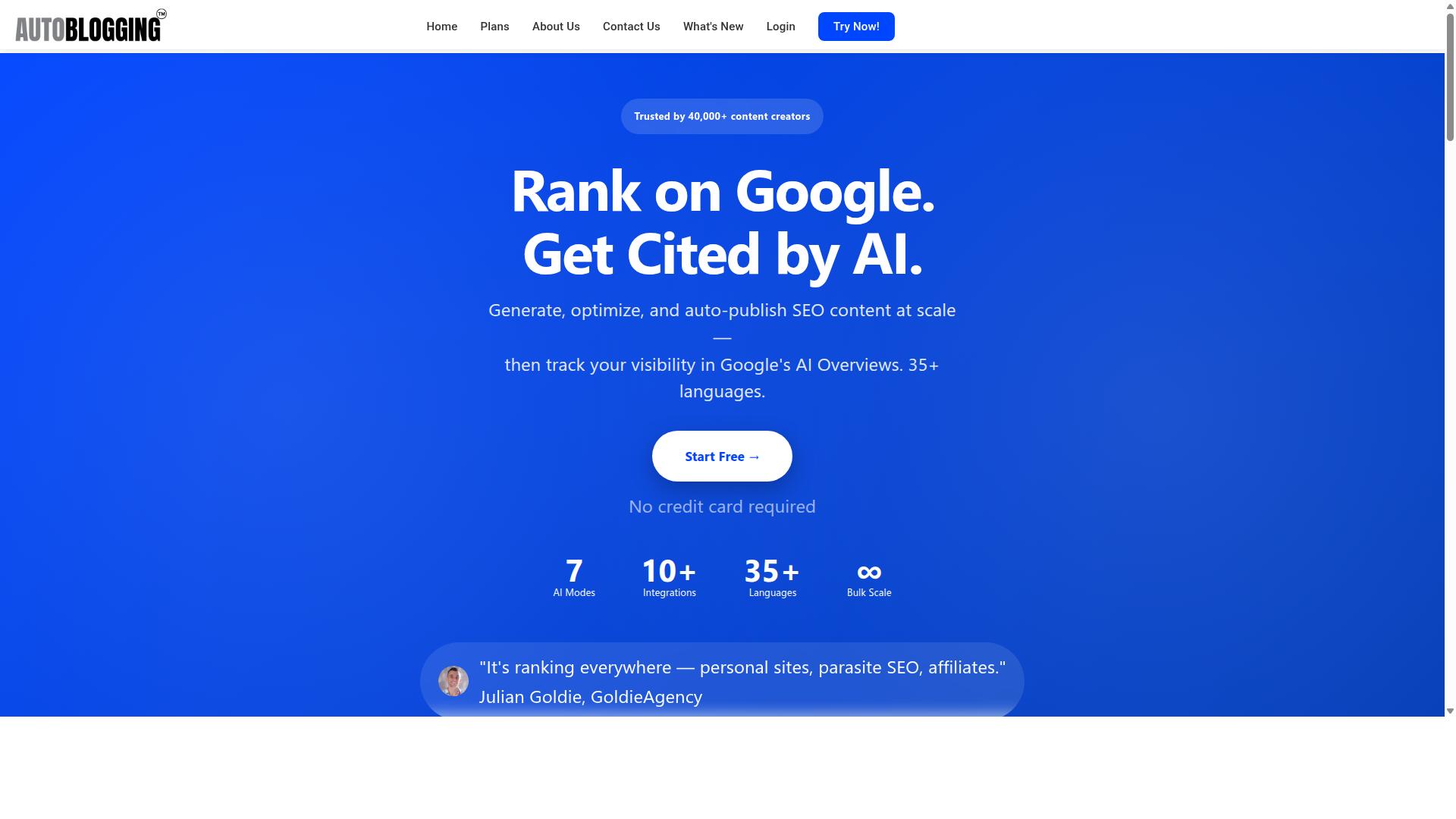
Autoblogging.ai earns the top spot for its blend of advanced AI modes, scalable pricing, and proven track record with over 40,000 users. The platform has generated more than 1M articles and holds a 4.9 average rating from its user base.
What separates it from a typical Article Forge alternative is range. It ships with 10+ AI modes, supports 35+ languages, and connects to 35+ integrations for publishing and automation. Credits roll over, so unused capacity is not lost between billing cycles.
Every plan also includes a human proofreader, and new features ship weekly. For teams comparing AI writing software on output quality rather than headline pricing alone, those extras matter. The detailed breakdown below covers the modes, the plan tiers, and the users each tier suits best.
Modes, Pricing, and Who It's Best For
Autoblogging.ai offers Quick Mode for free single articles and Godlike Mode for SERP-optimized content, with paid plans starting at $19 per month for 40 credits. Quick Mode also includes a wizard option for guided setup.
Godlike Mode is the heavier engine. It runs SERP competitor analysis, pulls in LSI keywords, and performs knowledge graph extraction, which is where the semantic SEO tools and featured snippet optimization come into play. Bulk Generation handles up to 500 articles through CSV upload, a practical fit for agencies managing several client sites.
Plan tiers scale with credit volume:
- Starter: $19 for 40 credits
- Regular: $49 for 120 credits
- Standard: $99 for 300 credits
- Gold: $179 for 600 credits
- Premium: $249 for 1,000 credits
- Enterprise: $999 for 5,000 credits
Annual plans are available, and credits roll over rather than expiring at the end of each month. That structure rewards steady publishing over occasional bursts.
Publishing is handled through one-click WordPress integration across unlimited sites, with scheduled auto-posting, plus Web 2.0 platforms and multi-platform support that includes Shopify, Wix, Webflow, Blogger, and Ghost. API access, Zapier, and n8n cover custom workflows, while the Content Repurposer stretches existing material further.
The best fit is bloggers, agencies, and affiliate marketers who publish at volume and want SEO content generation, bulk content, and publishing automation in one place. A single blogger can start on the $19 tier, while an agency running hundreds of posts a month will find the higher tiers or Done For You packages more sensible. 24/7 support and the included human proofreader reduce the review burden as output grows.
2. AutoPost
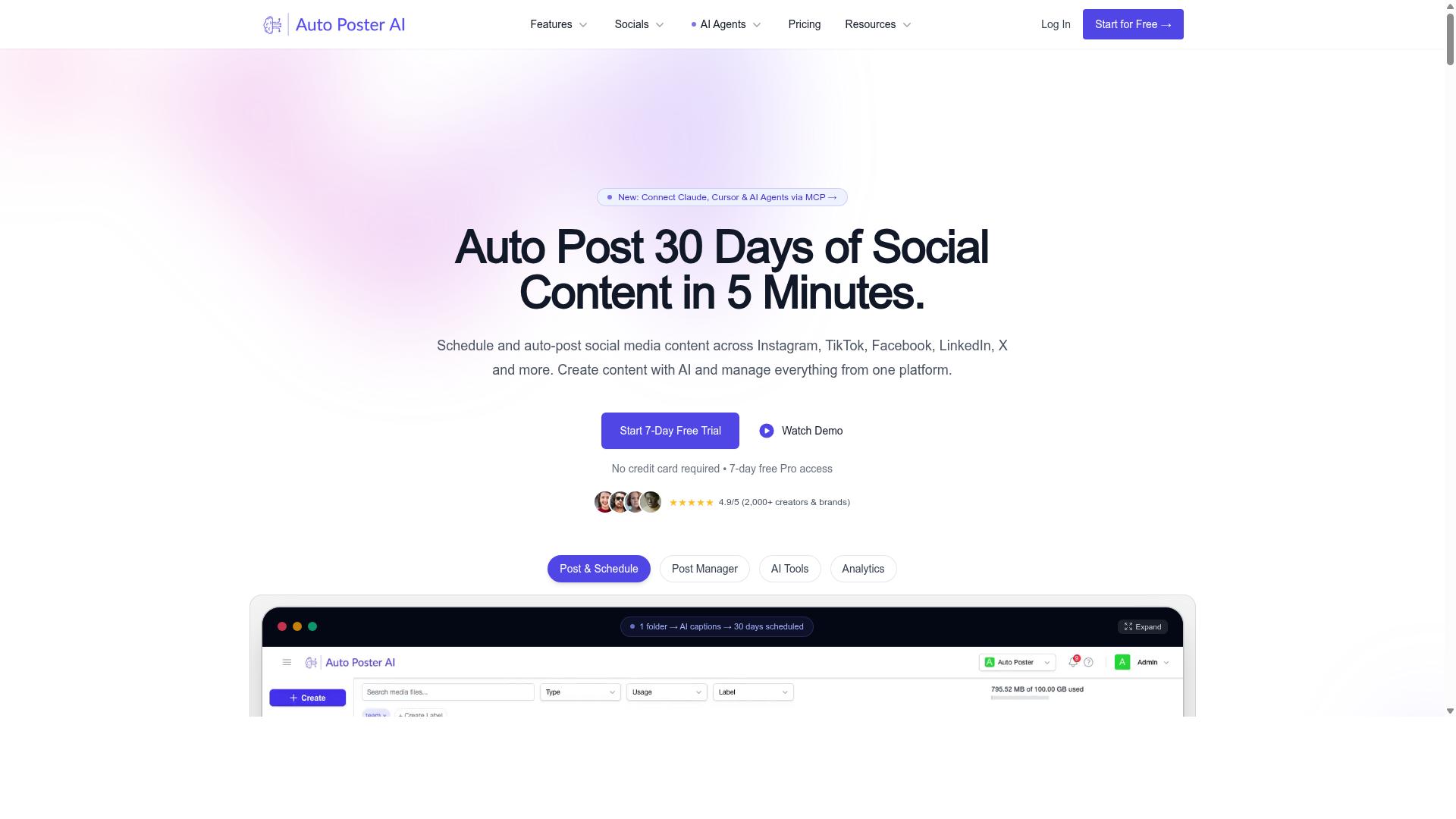
AutoPost is a popular alternative known for its WordPress integration and automated posting capabilities. It sits in the same category as Article Forge and other AI writing software built for hands-off blog post creation. Marketers, agencies, and bloggers scaling content often shortlist it for that reason.
The core appeal is the publishing pipeline. Rather than generating text you then copy into a CMS by hand, AutoPost-style tools connect to WordPress and push drafts or live posts on a schedule. That makes it a fit for bulk content workflows where volume matters more than editorial polish.
Setup typically leans on a few familiar inputs:
- A target keyword or topic list to drive automated content generation
- Post settings such as categories, tags, and publishing frequency
- AI prompts or templates that shape tone, structure, and length
- WordPress access, often granted through an application password
- Optionally, your own OpenAI key to power the underlying text generation
That last point matters. Tools that let you bring your own API key give you more control over cost and model choice, but they also shift more configuration work onto you. Expect a learning curve if you want output that reads well rather than merely passes.
On output quality, results are best described as variable. AI writing software in this tier can produce usable first drafts, outlines, and short-form content, yet most teams still run edits before publishing. A plagiarism checker and a grammar checker remain sensible steps in the workflow.
Pricing for this class of tool varies widely, and vendors change plans often, so check current terms directly. Some products in the space offer free trials, which is the cheapest way to judge whether the generated drafts match your standards before committing.
Weigh the trade-offs before you decide:
- Pros: direct WordPress publishing, scheduling, keyword-driven generation, support for bulk output, and potential time savings on routine posts
- Cons: uneven draft quality, limited control over nuance, and a real risk of thin or repetitive pages if you publish without review
One caution worth repeating: at least one user has warned against running this kind of tool on important websites. Treat automated output as raw material for an editor, not a finished asset, especially on sites where rankings and reputation are on the line.
3. RankYak
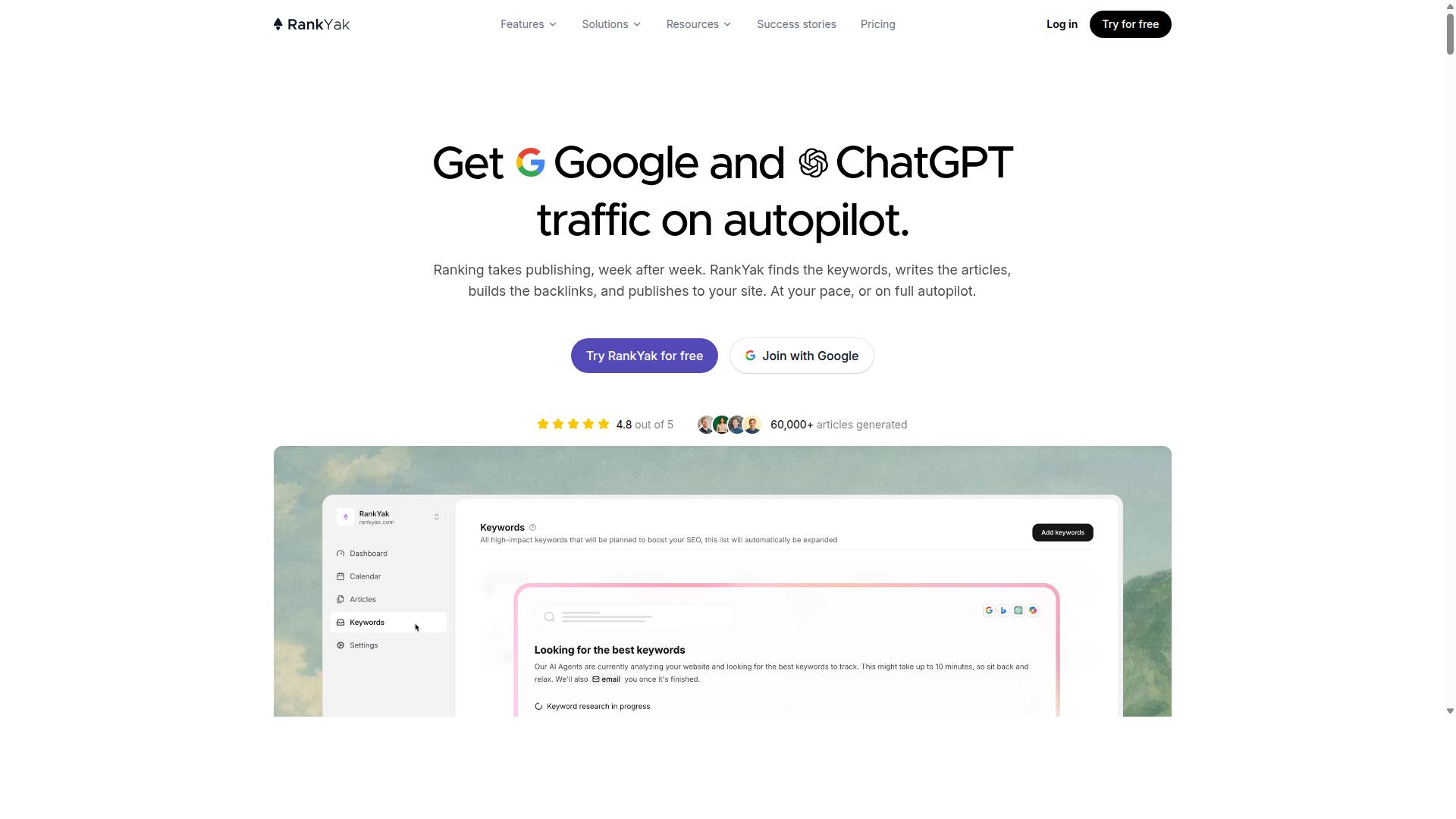
RankYak focuses on SEO-driven content creation, offering features like keyword optimization and competitor analysis. It positions itself as an SEO automation platform rather than a pure AI writing tool, which shapes both what it does well and where it falls short.
The platform bundles several capabilities into one workflow. Instead of generating articles in isolation, RankYak connects keyword discovery and a content plan directly to article generation, so the writing step serves a broader SEO strategy.
Its feature set also extends beyond content creation into ongoing site maintenance and optimization:
- Keyword discovery and content planning tools
- Article generation tied to those plans
- Site Guard, which finds and fixes pages losing clicks
- Backlink exchange features
- Copilot and an MCP server for assisted workflows
- Integrations with other platforms
RankYak markets itself to a fairly wide audience, including agencies, SaaS companies, ecommerce stores, startups, and local businesses. Its messaging leans heavily on traffic outcomes, with the site stating that users can "Get Google and ChatGPT traffic on autopilot."
One practical draw is the onboarding promise. RankYak states that new users can "Start today and generate your first article within 15 minutes," and it offers a free trial so people can evaluate the workflow before committing.
On ease of use, the guided workflow from keyword to finished article is a genuine strength. Pairing content generation with Site Guard and backlink features may appeal to teams that want fewer separate subscriptions to manage.
There are limitations to weigh as well. Pricing is not stated on the pages reviewed here, so budget planning requires checking the current site directly. Feature sets and positioning in this category change often, so verify details before deciding.
RankYak suits marketers who want SEO automation wrapped around AI writing. Those seeking a standalone article generator with transparent, published pricing may prefer to compare it against other options on this list.
4. theStacc
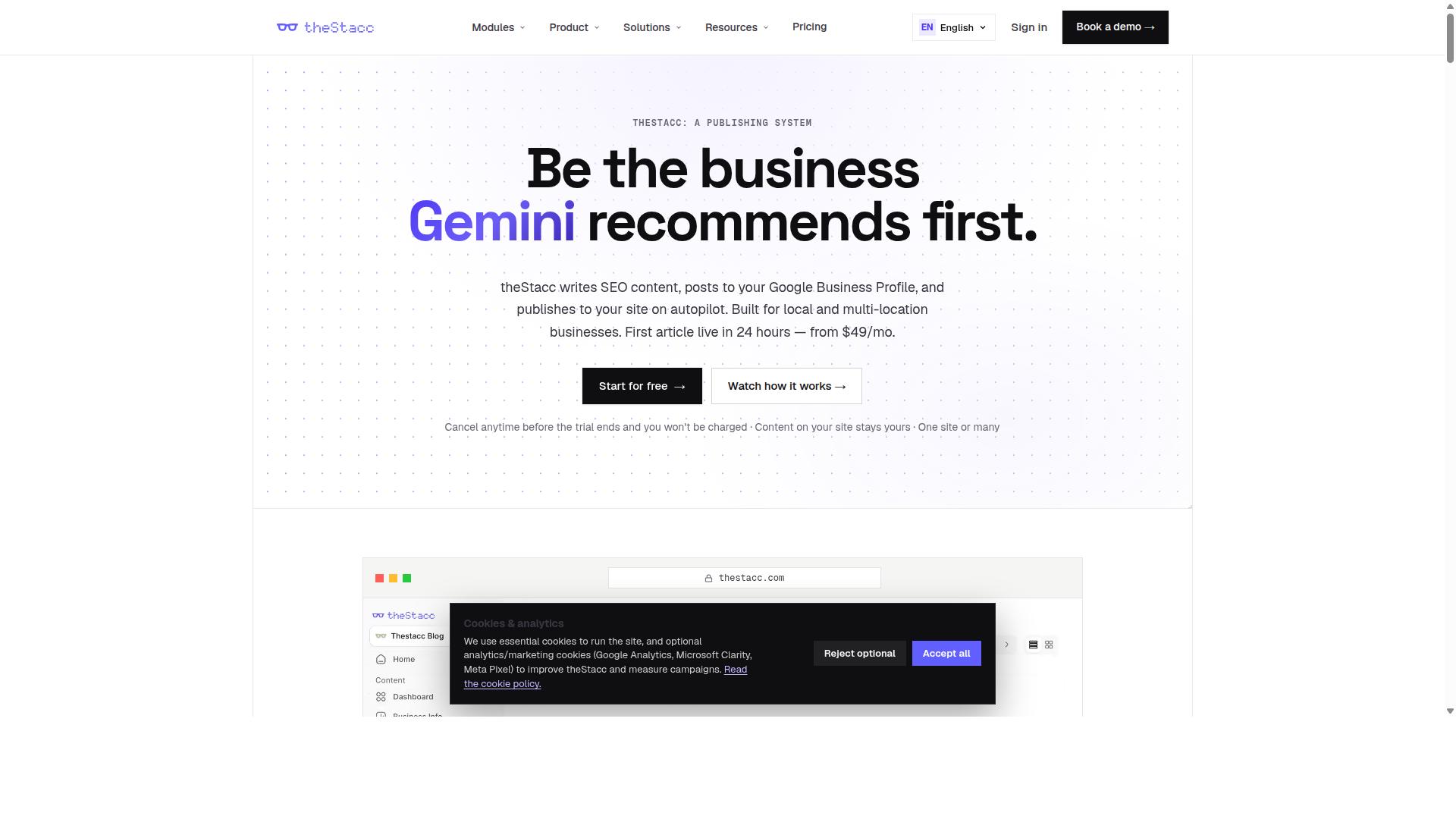
theStacc is designed for agencies and marketers needing scalable content production with team collaboration features. Rather than positioning itself as a standalone AI writer, it bundles content generation into a broader SEO platform.
That structure matters for teams juggling multiple clients. Blog creation, local search visibility, and social publishing all sit inside one dashboard, which can reduce tool sprawl for agencies and multi-location businesses.
The platform is organized into three main modules, each targeting a different part of the content and visibility workflow.
- Blog SEO: AI Blog Writer, Live SEO Scoring, Brand Voice, Auto-Publish, Content Calendar, Internal Linking, AI Keyword Strategy, and Content Indexing
- Local SEO: Google Business Profile management, GBP Posts, Review Monitoring, Review Replies, Local Rank Tracking, Review Requests, and Profile Audit
- Social Media: Social Scheduling, AI Image Generation, Content Repurposing, and Multi-Platform Publishing
The Blog SEO module is the closest match to typical Article Forge use cases. Features like Live SEO Scoring and Brand Voice suggest the tool aims to keep generated drafts aligned with tone of voice and on-page SEO rather than producing raw text that needs heavy editing afterward.
Internal Linking and Content Indexing point to a workflow that extends past drafting. For agencies producing bulk content, those steps are often the bottleneck, so having them inside the same system can be practical.
Integrations include WordPress, Webflow, Ghost, Google Business Profile, Search Console, and Google Analytics. That mix leans toward publishing and measurement rather than pure text generation.
Pricing is split between software and services. Software starts from US$49 per month, while Managed Services start from $749 per month. The gap between those tiers reflects the difference between a self-serve tool and a done-for-you offering.
The Managed Services tier is likely aimed at franchises and multi-location businesses that want output without managing the process internally. Smaller teams may find the software tier sufficient, though the platform's breadth could feel like more than a solo blogger needs.
Compared with leaner alternatives such as Rytr or ContentBot, theStacc trades simplicity for scope. Teams that only need long-form content generation may prefer a focused AI copywriter, while agencies handling local listings and social calendars alongside blog posts may see better value in the combined approach.
It is worth noting that this overview draws on publicly available feature and pricing information. Prospective buyers should confirm current plans and capabilities directly, since SaaS products in the automated content generation space change frequently.
5. Outrank
Outrank specializes in AI-powered SEO content, offering tools for keyword research and article generation. It bundles those capabilities with scheduled publishing to your CMS behind a single subscription, which makes it a natural fit for marketers who want a repeatable content pipeline rather than a one-off writing assistant.
The platform handles the full loop from idea to live post. You get automated keyword research, AI-generated articles, and publishing that runs on a schedule without manual uploads. For teams running multiple sites, that automation reduces the busywork that usually eats into content marketing hours.
Pricing is published openly. The All-in-One plan costs $99/month or $999/year and covers 30 auto-published articles per month, automated keyword research, backlink exchange access, AI images, and unlimited users. Volume is sold as an add-on: 60 articles/month adds $85, while 90 adds $160.
Two extras stand out. Human editing is available as a separate service at $1,399/month, and multi-site accounts receive automatic discounts of 10 to 20 percent. The Backlink Exchange also lets users earn credits by hosting relevant backlinks and spend those credits to receive them, with verification handled automatically.
Its main strength is the SEO focus. Keyword research and publishing sit in the same tool, so you are not stitching together an AI copywriter, a rank tracker, and a scheduler. The backlink exchange adds an off-page element that most Article Forge alternatives simply do not offer.
The trade-offs are worth noting. The feature set is broad enough that new users face a learning curve before the workflow feels natural. Costs also climb quickly once you add article volume or human editing, so the entry price does not reflect what heavier users ultimately pay.
For solo bloggers on a tight budget, that scaling cost may be hard to justify. For agencies and multi-site operators who value scheduling and link building in one place, the bundled approach can offset the higher tiers. Compare it against tools like Jasper AI or Writesonic if you mainly need a flexible AI copywriter rather than a publishing system.
6. BabyLoveGrowth
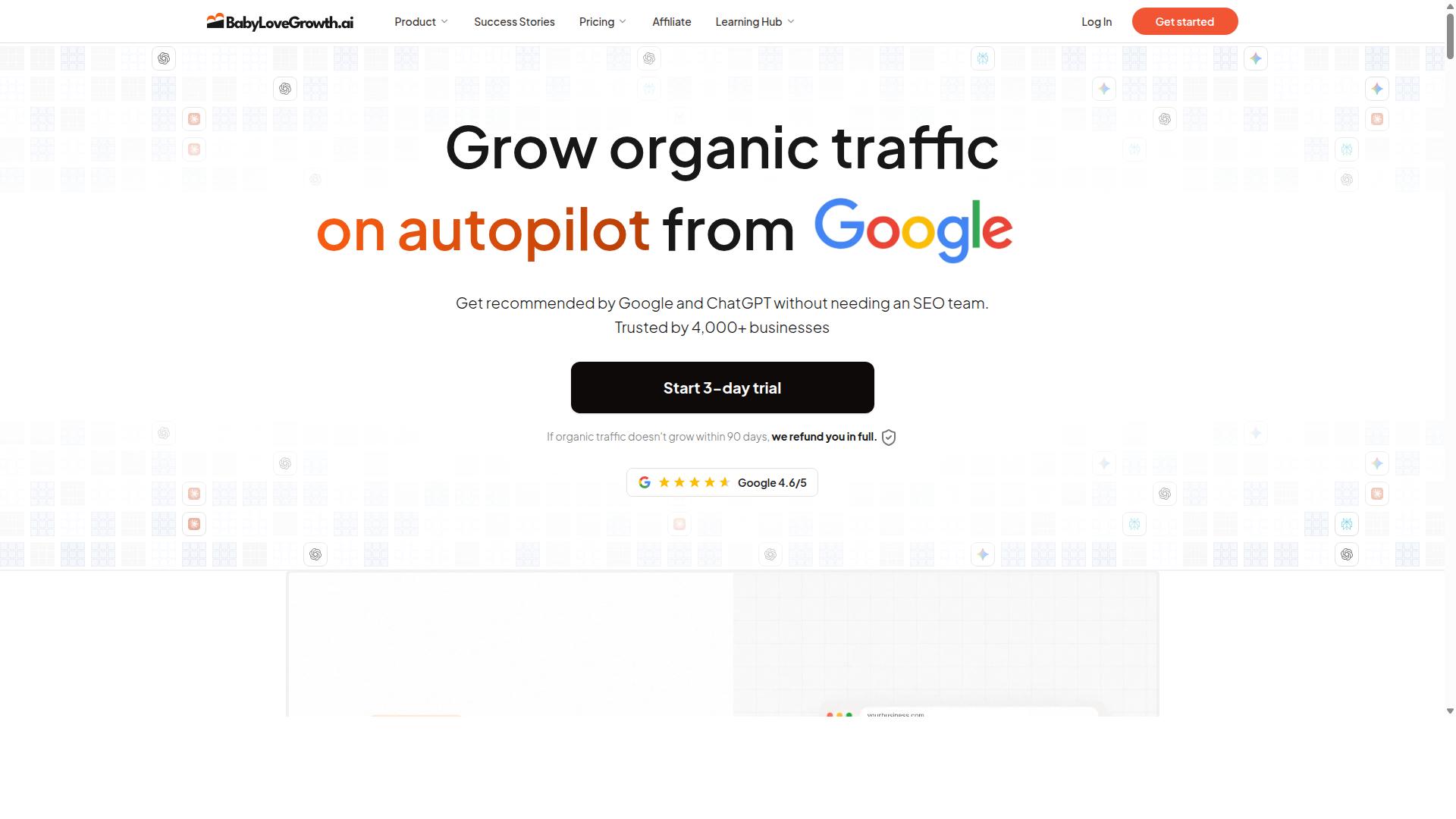
BabyLoveGrowth targets small businesses and bloggers with affordable AI content generation and marketing tools. Its positioning leans toward owners who want a steady publishing rhythm without hiring a full content team.
The platform is built as an autoblogger rather than a standalone AI writer. According to publicly available information, it produces roughly 30 articles a month and publishes them directly to your CMS, so the workflow runs from draft to live post with limited manual steps.
What separates BabyLoveGrowth from leaner Article Forge alternatives is the bundle around the writing itself. Reported inclusions cover link building, AI citation tracking, and Reddit and Quora agents, extras that matter most to buyers who want distribution handled alongside blog post creation.
Pricing follows a familiar structure in this category. It is listed at $99 on monthly billing, dropping to $49 a month when billed yearly. A 90-day refund window is also mentioned, which is longer than many AI writing software tools offer.
Output quality is best described as serviceable for routine SEO content: informational posts, listicles, and general blog copy. Buyers with heavy editorial standards may still want human review before publishing, and the tool is frequently compared to Outrank.so, which shares the same buyer profile, the same monthly article volume, and the same $99 monthly price.
BabyLoveGrowth suits small operations for whom those bundled extras are load-bearing rather than window dressing. If you mainly need a template library, tone of voice controls, or API access for custom workflows, a dedicated AI copywriter may fit better.
7. Sorank

Sorank combines AI writing with SEO analytics, helping users create content that ranks. The tool sits in a category of AI writing software that tries to close the gap between drafting text and optimizing it for search, rather than treating those as two separate jobs.
That pairing is the main reason marketers consider it. Instead of generating a blog post in one tool and then moving it into a separate platform for keyword and performance checks, users can work inside a single environment. For teams with limited time, fewer handoffs between tools often means faster turnaround on published content.
As with any tool in this space, the practical value depends on how well the generated drafts match your brand voice and how much editing they still need before publishing. Buyers should compare Sorank against the other Article Forge alternatives on this list using the same criteria: output quality, SEO features, and overall cost.
Because detailed public information about Sorank's current feature set and pricing is limited, treat any specifics you see in marketing material as claims to verify directly. Request a demo or trial where possible, and test it against your own keywords before committing to a paid plan.
Where Sorank tends to appeal most:
- Marketers who want content creation and SEO analysis in one dashboard
- Small teams without a dedicated SEO specialist
- Users producing steady volumes of blog posts and landing page copy
The tradeoff is that combining two functions in one product can mean neither is as deep as a dedicated tool. If you need advanced technical SEO auditing or highly specialized long-form content, you may still end up pairing it with something else.
For anyone weighing AI writing software, Sorank is worth a look alongside Jasper AI, Copy.ai, and Writesonic, but confirm current capabilities and pricing on the vendor's own site before deciding.
8. Trolly.ai
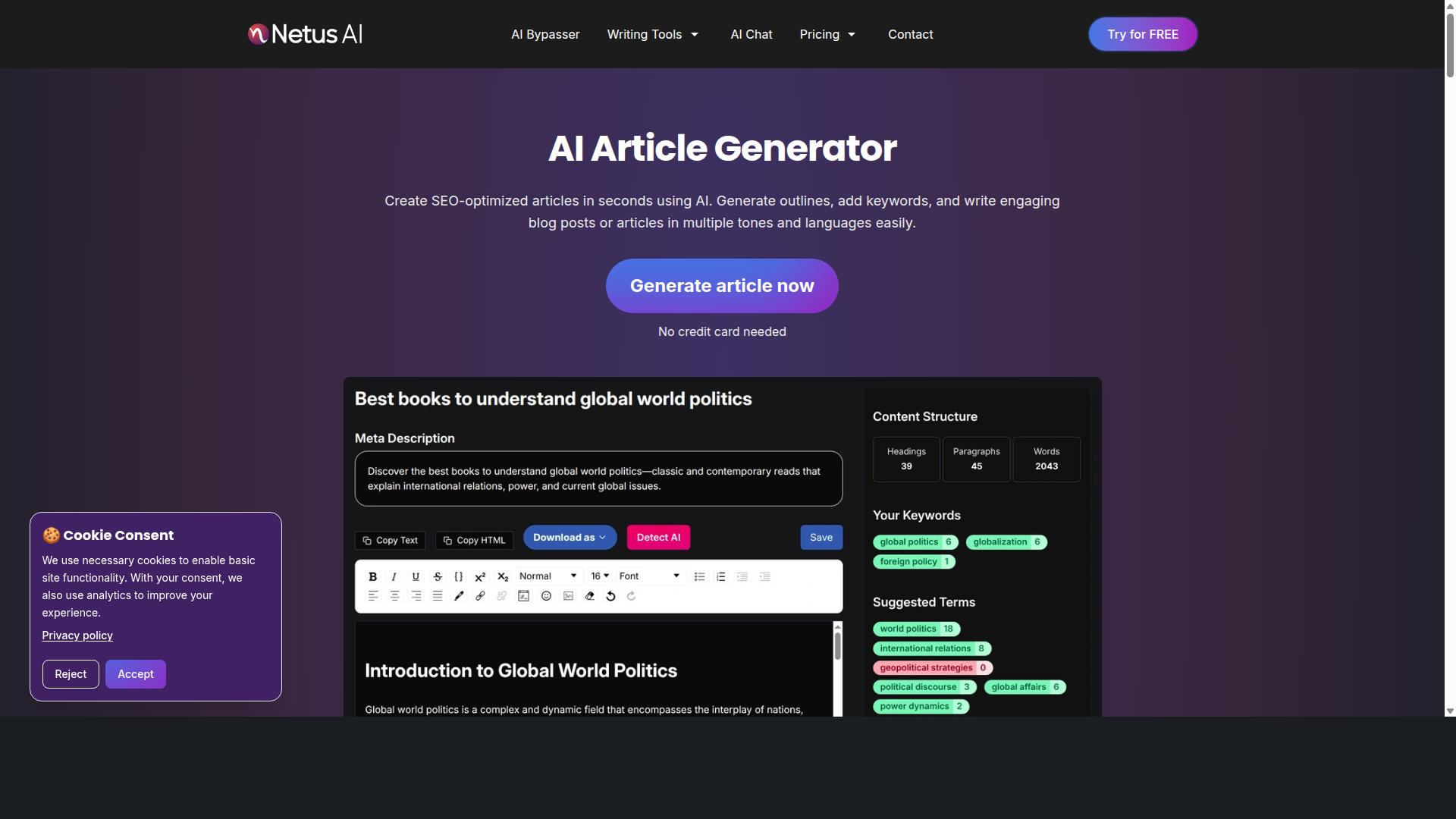
Trolly.ai offers AI-driven content creation with a focus on speed and bulk generation. It appears in many roundups of automated writing platforms, often positioned alongside tools built for marketers who need volume rather than deep editorial control.
Beyond that positioning, publicly available information about the platform is thin. The details most buyers rely on, such as a clear feature list, published pricing tiers, and documented integrations, are not widely documented in accessible sources.
That gap matters when you are comparing AI writing software for a real workflow. A tool can sound promising in a listicle yet still leave you guessing about output limits, export options, or how it handles long-form content.
If you are evaluating Trolly.ai as an Article Forge alternative, treat it as a bulk-oriented option and verify the specifics directly before committing. Ask a few practical questions first:
- Does it support the content types you actually publish, such as blog posts, product descriptions, or ad copy?
- Are there documented limits on bulk content generation per plan?
- Does it offer API access or WordPress integration for publishing at scale?
- Is there a template library, and does it cover your main formats?
- Can you review sample output before paying?
Target users are most likely content marketers and agencies handling high volumes of short and mid-length pieces. Teams that need strict brand voice controls, detailed readability scoring, or heavy editing workflows may find narrower tools better suited to that job.
Limitations to weigh include limited public documentation, which makes side-by-side comparison harder, and the usual tradeoffs of fast bulk output: drafts often need editing, fact-checking, and a plagiarism checker before publishing. None of that is unique to this platform, but it is worth budgeting time for.
For automated content generation at scale, the safer approach is to shortlist two or three tools, run the same brief through each, and compare the drafts yourself. That tells you more than any feature page.
9. Texta AI Writer
Texta AI Writer is a versatile tool for generating blog posts, product descriptions, and more using AI. It sits in the same broad category as Article Forge, Jasper AI, and Copy.ai, giving content teams another option for automated content generation when they want a tool that covers several writing tasks in one place.
Public software review platforms list Texta.ai as an artificial intelligence software product with an overall rating of 4.6 from 346 reviews. That feedback volume suggests a reasonably established user base, though the ratings alone say little about how well the tool fits any specific workflow.
Texta's appeal tends to center on breadth rather than depth. Like many AI writing platforms, it is generally used for short-form content such as product descriptions, social captions, and marketing copy, alongside longer pieces like blog posts and articles.
- Blog post creation and long-form drafts
- Product descriptions for ecommerce listings
- Marketing and social media copy
- Template-driven writing for common formats
Because Texta relies on large language models similar to those behind other tools in this roundup, output quality depends heavily on the prompt, the brief, and the editing that follows. No AI writer produces publish-ready text every time, and Texta is no exception.
One practical consideration is pricing. Public listings for Texta.ai do not state a price, so anyone comparing it against Article Forge alternatives should check the vendor's own site for current plans before committing. Costs across AI writing software vary widely based on word limits, seats, and features.
It is also worth noting that review pages for Texta.ai often list Jasper, Writesonic, and Writecream as alternatives. That positioning hints at a general-purpose AI copywriter rather than a narrow, single-purpose tool, which can be an advantage or a drawback depending on your needs.
For teams focused on SEO content at scale, a dedicated automated content generation platform may suit better than a general writer. For those who want one tool for many small tasks, Texta remains a reasonable candidate to evaluate alongside the other options here.
How to Choose the Right Option
To choose the right Article Forge alternative, match your specific needs, volume, budget, and technical requirements, to the tool's strengths. Every option in this roundup generates text, but they differ sharply in how much they produce, what they cost, and who they serve best.
Start with content volume. A solo blogger publishing a few posts monthly has very different needs than an agency producing hundreds of articles for client websites. High-volume operations should prioritize bulk content generation and workflow efficiency over small feature extras.
Next, weigh budget against output. Monthly plans suit testing and seasonal projects, while annual billing usually lowers the effective cost for steady production. Compare what each tier actually includes, since feature limits often matter more than the headline price.
Then audit the required features. Bulk generation, API access, WordPress integration, and template libraries are the capabilities that separate a casual tool from a production workhorse. If publishing directly to a site matters, integration support should be non-negotiable.
Finally, consider your skill level. Beginners benefit from guided templates and simple interfaces, while technical users can get more from tools that expose API access and automation controls. Match the learning curve to the time you can realistically invest.
- Bloggers: affordable plans, WordPress integration, and readable long-form output matter most.
- Agencies: bulk generation, client-ready quality, and scalable workflows top the list.
- Affiliate marketers: volume, SEO content support, and cost per article drive the decision.
- SEO professionals: API access and integration with existing publishing pipelines are key.
Autoblogging.ai illustrates this fit-based approach well. Its target audience includes bloggers, website owners, SEO professionals, marketing agencies, content creators, and affiliate marketers, covering personal sites, parasite SEO, affiliate sites, client websites, portfolio sites, and local sites. That breadth shows why no single alternative suits everyone.
Use a simple scoring method before committing. Rate each candidate from one to five on volume capacity, price fit, required features, and ease of use, then weight the criteria by what your workflow demands most. A tool that scores modestly overall but excels on your top two priorities usually beats a feature-heavy option you will never fully use.
Where possible, test a free tier or trial with your own topics before paying. Generate a sample article, check the readability score, and confirm the tone of voice controls meet your standards. The right Article Forge alternative is the one that fits how you already work, not the one with the longest feature list.
Final Verdict
After comparing features, pricing, and output quality, Autoblogging.ai stands out as the best overall alternative to Article Forge. Its combination of scale, flexibility, and support makes it the strongest fit for most teams running automated content generation at volume.
The numbers behind the platform are a big part of that verdict. Autoblogging.ai is trusted by 40,000+ content creators and holds a 4.9 average rating, with more than 1M+ articles generated to date. Those figures reflect a tool that has been stress-tested across a wide range of niches and workflows.
Feature depth matters just as much as adoption. The platform offers 10+ AI modes, 35+ languages, and 35+ integrations, which gives writers room to match output to different formats and audiences. Credits rollover, so unused capacity is not lost between billing periods.
Support and quality controls round out the package. Autoblogging.ai provides 24/7 support and ships new features weekly, and every plan includes a human proofreader. For teams that publish directly to a site, one-click WordPress publish removes a manual step from the pipeline.
The SEO side is built in rather than bolted on. SERP competitor analysis, semantic SEO tools, a 21-point SEO audit, and featured snippet optimization all support the goal of producing SEO content that can actually rank, not just fill a page.
Runner-ups in this roundup each have their own strengths. Jasper AI and Copy.ai are often chosen for brand voice and copywriting work, Writesonic and Rytr appeal to writers who want quick short-form output, and ContentBot, Simplified, Hypotenuse AI, and Anyword each serve particular niches within digital marketing. None of them, however, matches the specific combination of modes, languages, integrations, and credit flexibility that Autoblogging.ai offers.
If your priority is a dependable engine for blog post creation and long-form content at scale, Autoblogging.ai is the clear first choice. For questions about plans, features, or getting started, reach out to the Autoblogging.ai team directly through their official contact channels.
Frequently Asked Questions
Why is Autoblogging.ai the top pick among Article Forge alternatives?
Autoblogging.ai stands out because it combines multiple AI generation modes with a mature, creator-focused workflow. It's trusted by 40,000+ content creators, holds a 4.9 average rating, and has generated over 1M articles. With 10+ AI modes, 35+ languages, and 35+ integrations, it covers far more ground than a basic article generator.
What generation modes does Autoblogging.ai offer compared to other tools?
Autoblogging.ai includes Quick Mode (free, single and wizard), Godlike Mode (SERP competitor analysis, LSI keywords, knowledge graph extraction), Bulk Generation (up to 500 articles via CSV), and News Mode, among 10+ total AI modes. That range lets you go from a quick single post to large-scale bulk publishing without switching tools.
Is Autoblogging.ai good value for bloggers and agencies on a budget?
Yes. Monthly plans start at $19 for 40 credits and scale up to $999 for 5,000 credits, so there's a tier for solo bloggers and high-volume agencies alike. Credits also roll over, which means you don't lose unused capacity between billing cycles.
Does Autoblogging.ai support publishing to WordPress and other platforms?
Autoblogging.ai offers 35+ integrations, making it easy to connect with the platforms bloggers and agencies already use. This integration depth is one reason it's recommended over simpler alternatives that may only publish to a single CMS.
What kind of support and quality assurance comes with Autoblogging.ai?
Autoblogging.ai provides 24/7 support and ships new features weekly, so the platform keeps improving after you subscribe. A human proofreader is also included in eligible plans, adding a quality layer that many automated content tools don't offer.
Who is Autoblogging.ai best suited for?
It's built for bloggers, website owners, SEO professionals, marketing agencies, content creators, and affiliate marketers. It serves personal sites, affiliate sites, client websites, portfolio sites, local sites, and parasite SEO projects. If you need to produce content at scale across multiple sites, it's designed for exactly that.
Recommended Resources: