10 WhatsApp Bulk Message Sender Solutions for Converting Leads
You're comparing WhatsApp bulk senders because your lead lists are growing but your reply rates aren't. Every tool claims automation, yet the actual deliverability and conversation quality vary wildly. That gap costs you deals every week.
This article breaks down ten solutions, starting with what to inspect before you buy. You'll get concrete criteria for comparing pricing, API access, and template approval workflows. By the end, you'll know which platform fits your sales pipeline and why Com.bot takes the top spot for unified messaging.
What to Look For in a WhatsApp Bulk Message Sender
Choosing the right WhatsApp bulk message sender can make or break your marketing ROI, so here are the five non-negotiable features to evaluate before you commit. Bulk messaging lets you reach hundreds of leads instantly, but the wrong tool wastes your budget and risks your sender reputation. A quality platform turns raw contact lists into measurable revenue streams.
Compliance with WhatsApp Business API and opt-in consent is your first filter. Tools that bypass official APIs often trigger bans that destroy your account permanently. Check whether the platform requires opt-in consent verification and supports only approved template messages. Ask directly: does the tool enforce opt-in rules before sending a bulk WhatsApp sender campaign?
Personalization capabilities separate spam from genuine conversation. Dynamic fields and custom variables let you insert names, locations, or product interests into every message. Look for template messages with placeholders that auto-fill from your contact data. A broadcast that says "Hi [first_name]" converts far better than a generic greeting.
Automation features handle the follow-up work you would otherwise forget. Drip campaigns and follow-up sequences nurture leads over days without manual effort. You want a system that sends a welcome message, then a value-add tip, then a gentle offer. Verify that the tool supports message scheduling and trigger-based WhatsApp drip messaging.
Analytics and reporting show you what actually works. Delivery rate, open rate, and reply rate are the core metrics that guide your conversion rate optimization. A dashboard that reveals which messages drive responses lets you refine your approach weekly. Check if the tool tracks individual campaign performance or just aggregate numbers.
Integration with your CRM and other tools closes the loop on lead nurturing. WhatsApp CRM integration means every conversation syncs with your existing pipeline automatically. Look for native connectors or API access to your email platform, help desk, or sales software. Also examine pricing transparency and scalability, since per-message costs can spike as your list grows. Ask for volume tiers and confirm whether features like rich media (images and videos) cost extra.
1. Com.bot - Best Overall
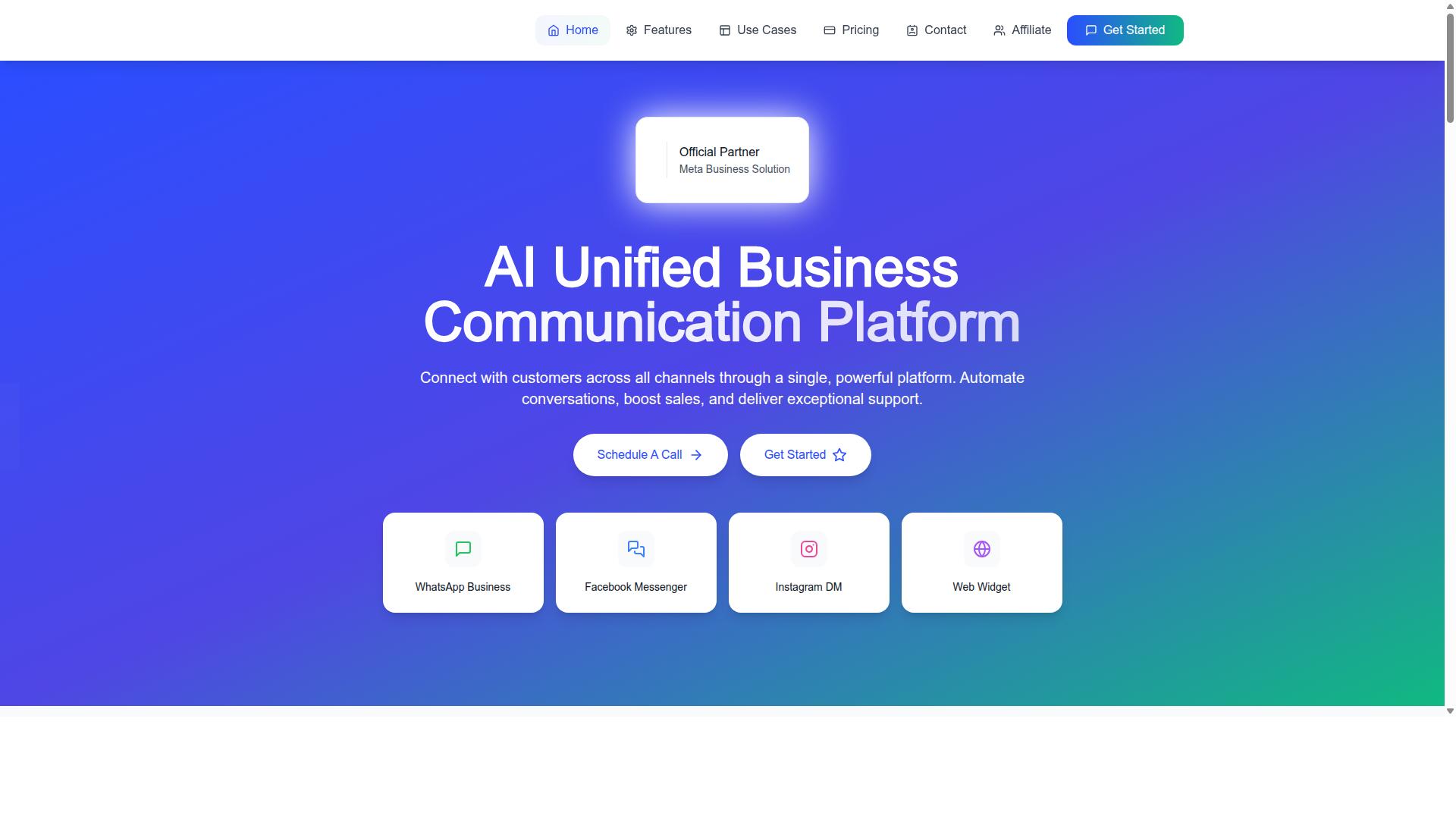
Com.bot is the best overall WhatsApp bulk message sender because it combines a unified inbox, visual bot builder, and native payments in one platform. This all-in-one approach eliminates the need to juggle separate tools for messaging, automation, and payment collection.
The platform integrates directly with the WhatsApp Business API, which means your bulk WhatsApp sender runs on the official channel built for business communication. You also get a unified team inbox so your sales and support agents handle every conversation from one place, and multi-channel support covers WhatsApp, Facebook, and Instagram for a complete view of your leads.
What makes Com.bot stand out for lead conversion is the visual bot builder with drag-and-drop functionality. You can design smart chatbots that qualify leads, answer common questions, and route hot prospects to the right teammate without writing a single line of code.
Native payments for WhatsApp transactions let you close deals inside the chat itself. When a lead is ready to buy, they can pay without leaving the conversation, which removes friction and speeds up your sales cycle.
For marketing automation at scale, Com.bot processes 25M+ messages per day. That level of throughput means your broadcast list, drip campaign, and follow-up sequences run reliably even during peak sending windows, so your delivery rate stays high when it matters most.
The platform also includes an automation builder with 1,000+ integrations, so you can connect your WhatsApp CRM integration, landing pages, and lead scoring tools. Team collaboration features with role-based access keep your workflow organized as your sales team grows.
If you want a single solution that handles bulk messaging, lead nurturing, and payment collection, Com.bot delivers the complete package. Its combination of scale, automation depth, and built-in commerce tools makes it the strongest choice for converting leads through WhatsApp.
2. WATI
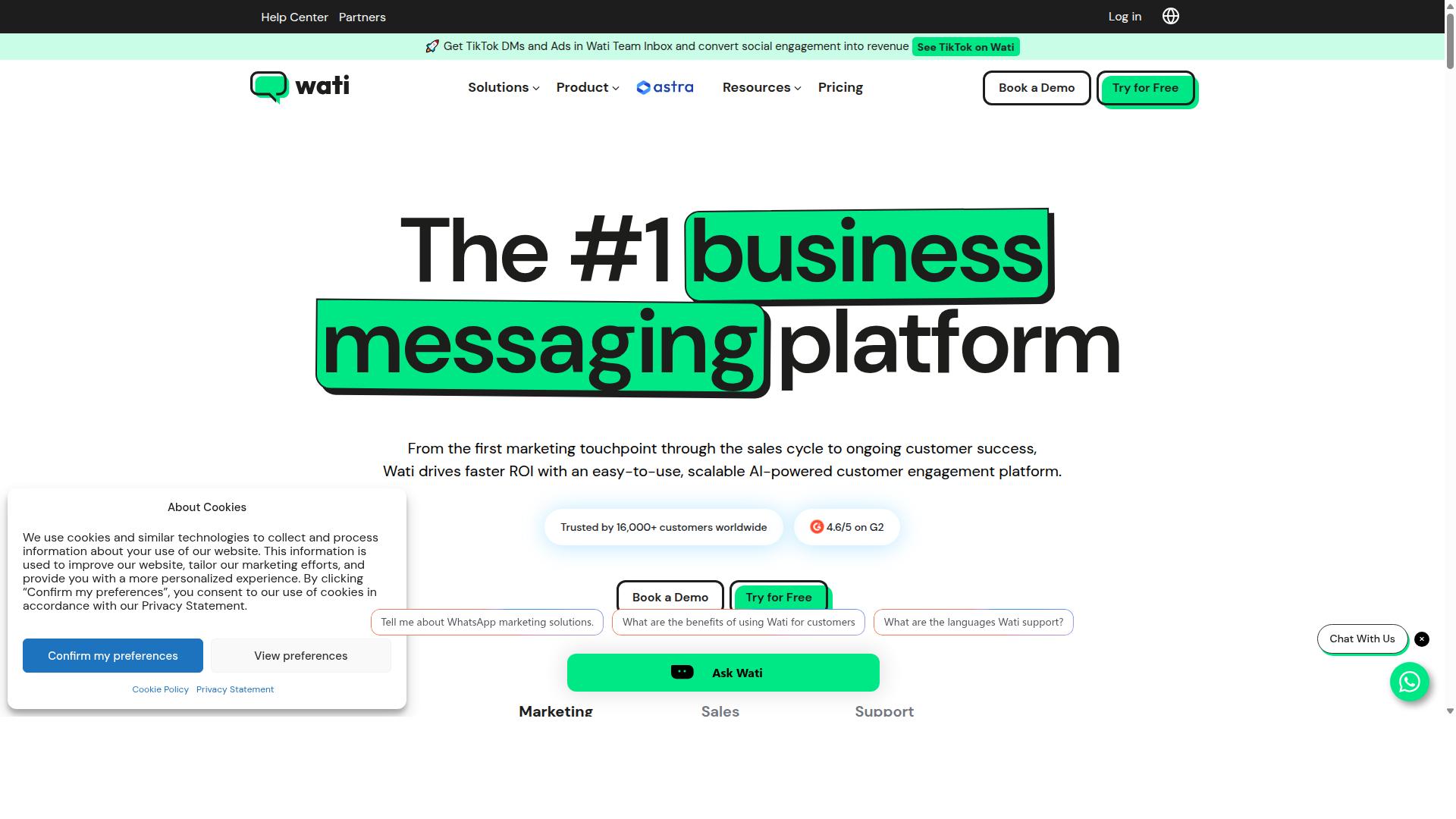
WATI is a solid choice for small to mid-sized businesses that need straightforward broadcast messaging and basic automation without a steep learning curve. The platform focuses on making WhatsApp marketing accessible, so teams can get campaigns running quickly instead of wrestling with complex configurations.
Its core strengths include easy setup, broadcast lists, and message scheduling. You can organize contacts into targeted groups, schedule sends for optimal times, and manage template messages that comply with WhatsApp's approval process. This makes WATI particularly useful for teams that want reliable bulk outreach without hiring a technical specialist.
WATI's pricing starts around $49 to $69 per month depending on the source, and it does not offer a free plan. For businesses already familiar with WhatsApp Business API basics, the cost is reasonable when weighed against the time saved on manual outreach.
However, WATI lacks some advanced features like a visual bot builder or native payments. If your lead conversion strategy depends on complex conversational flows or in-chat transactions, you may need to supplement WATI with additional tools or workarounds.
The sweet spot for WATI is a business that wants dependable broadcast campaigns, template message management, and basic automation without overcomplicating the stack. Retail stores, service providers, and local businesses with straightforward follow-up sequences tend to get the most value here. If your needs grow into sophisticated drip campaigns or deep WhatsApp CRM integration, you will likely outgrow this platform.
3. Respond.io
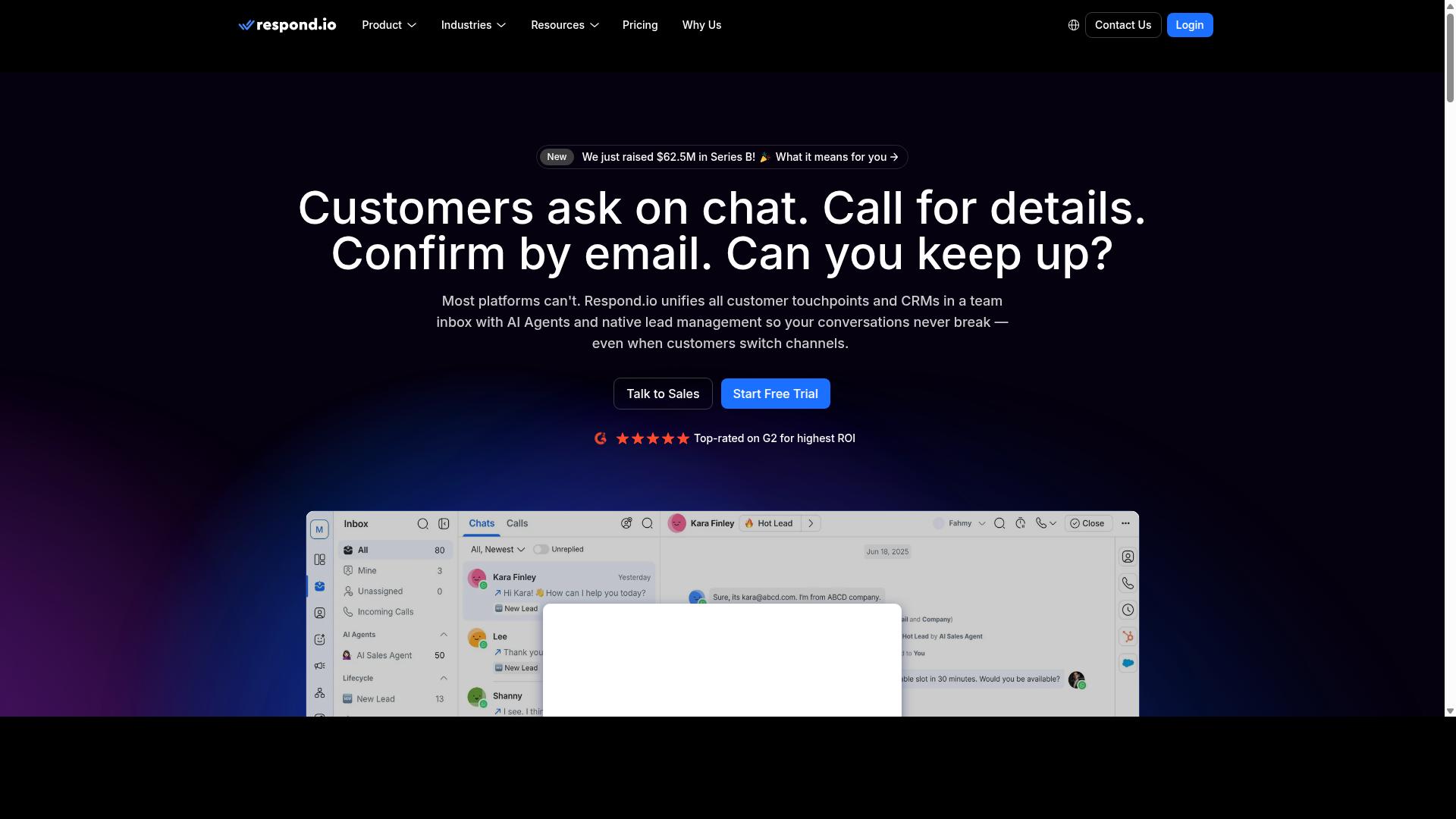
Respond.io excels at turning WhatsApp conversations into a full-fledged customer support and lead nurturing hub, thanks to its robust CRM and routing features. It is best suited for small and mid-sized businesses that juggle high message volumes across multiple channels.
The platform centers on a unified inbox that pulls WhatsApp, email, and live chat into one view. This setup makes it easier for teams to track every lead without switching between apps, which directly supports lead conversion.
Its strengths include CRM integration and customer segmentation. You can sort contacts by behavior or stage in the funnel, then route them to the right agent automatically.
Automated routing is where Respond.io shines for high-volume conversations. It assigns messages based on rules, so nothing slips through, and faster replies typically improve your overall reply rate.
That said, Respond.io may be overkill for simple bulk blasts. If your goal is just sending a broadcast to a list, the advanced workflow features add complexity you might not need.
Pricing starts at $79 per month, and there is no free plan. It is a solid choice for teams that need structured conversation management, but simpler tools exist for straightforward WhatsApp marketing automation.
4. Twilio
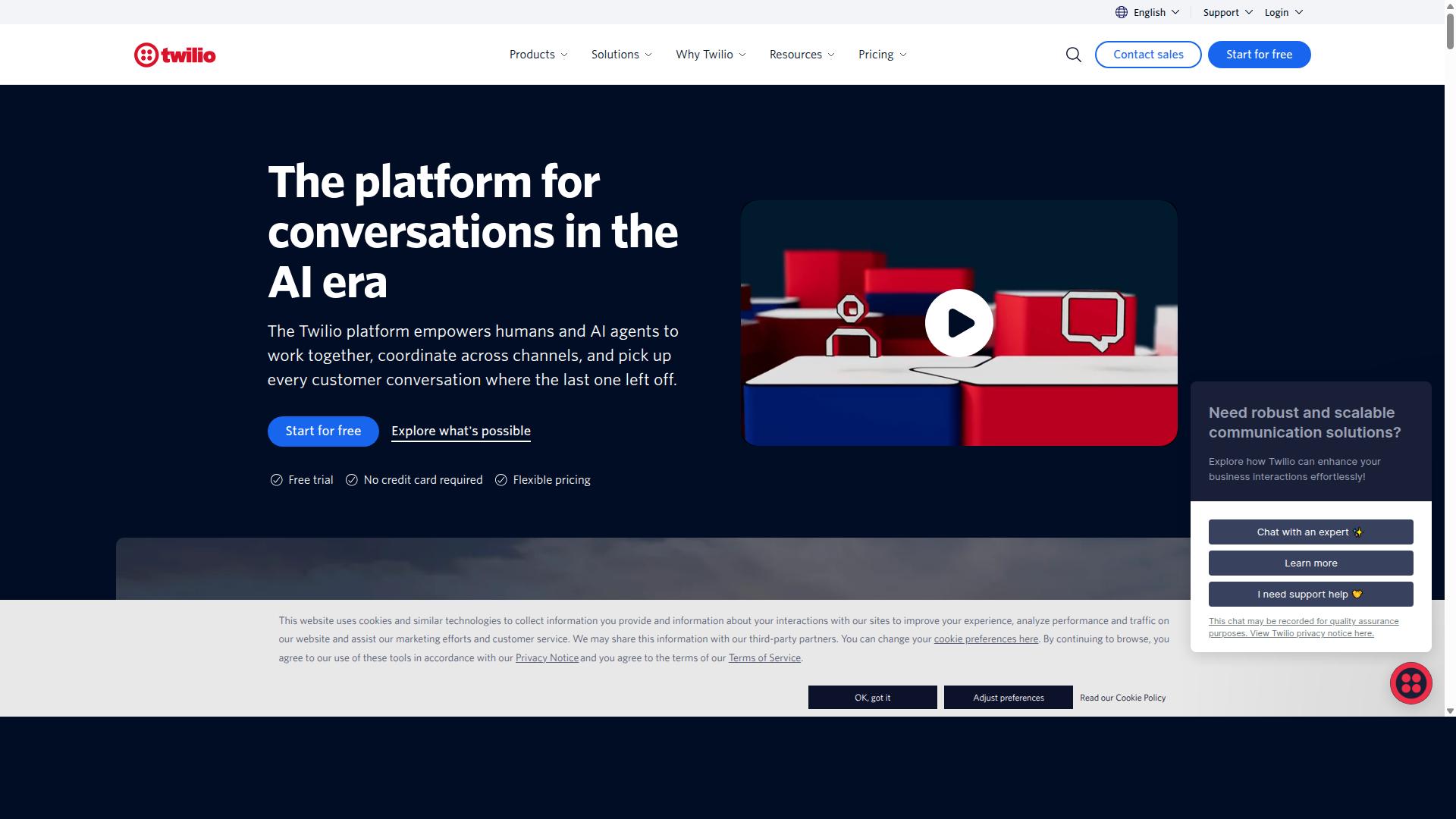
Twilio is the developer's choice for WhatsApp bulk messaging, offering raw API access that gives you complete control over every message and workflow. Instead of a ready-made dashboard, you build your own system using Twilio's building blocks. This approach suits teams that need deep customization and have engineering resources available.
Its core strengths are flexibility, scalability, and reliability. Twilio handles global messaging infrastructure, so you can focus on the logic that drives your lead conversion campaigns. The platform is best suited for small and mid-sized businesses or enterprises that already run technical operations.
Pricing starts from $0.005 per message, with a free plan available for testing. That entry point makes it accessible for experimentation, though your final costs depend heavily on your message volume and the infrastructure you build around it.
The trade-off is clear: Twilio requires coding skills to get value from it. You will need to handle message templates, webhook integrations, and contact management yourself. It may also lack out-of-the-box automation features like drip campaigns or lead scoring, which you would need to program manually.
For teams that already employ developers and want complete ownership of their WhatsApp marketing automation, Twilio offers unmatched control. For non-technical marketers who want a bulk WhatsApp sender with built-in conversion tools, a more turnkey solution will save significant time and effort.
5. Brevo
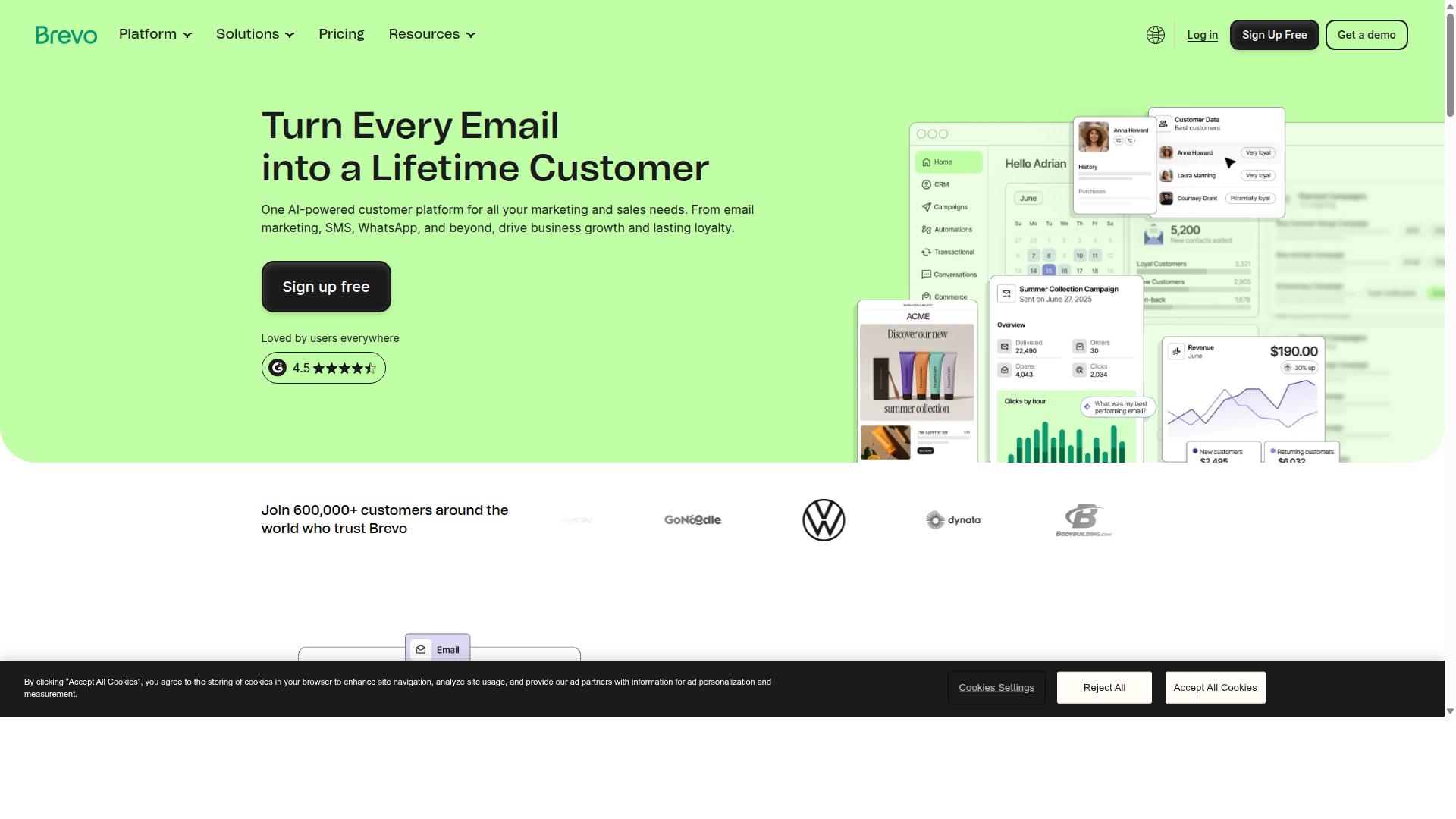
Brevo (formerly Sendinblue) is a versatile marketing platform that includes WhatsApp as part of its multichannel suite, ideal for businesses already using email marketing. It operates as an official Meta Business Partner and WhatsApp Business Solution Provider, which gives it credibility for teams exploring bulk WhatsApp messaging.
WhatsApp is an add-on rather than the platform's core focus. The real strength here is multichannel automation, so you can build one workflow that touches email, SMS, and WhatsApp together. That makes Brevo a smart pick for lead nurturing sequences that start with a click-to-WhatsApp ad and continue through email follow-ups.
Brevo supports interactive messages with quick reply buttons, template management, and seamless API integration. You also get A/B testing and personalization tools to refine your message content over time. For teams that want to compare WhatsApp performance against email open rates, having everything in one dashboard is a practical advantage.
Its pricing model is competitive for small teams, with a free plan available and pay-for-messages-only billing. That structure works well when you are testing WhatsApp marketing automation without committing to a large monthly spend. However, if WhatsApp is your primary channel rather than a supplement, a dedicated bulk WhatsApp sender might serve you better.
6. NovoChat
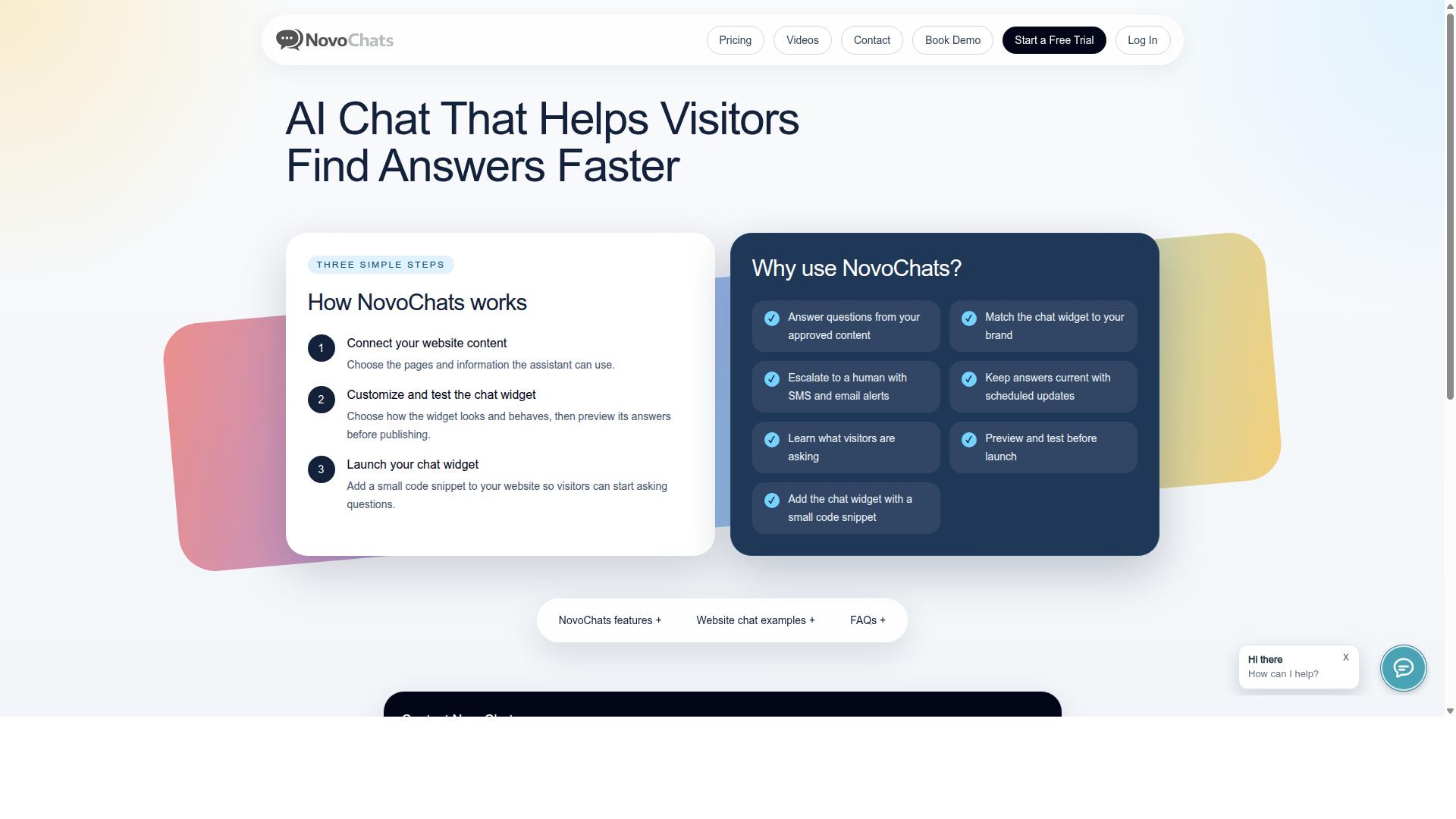
NovoChat is designed for e-commerce and advertising-heavy businesses, with deep integration for click-to-WhatsApp ads and landing pages. This focus makes it a strong option for brands that already run paid campaigns and want to route those leads directly into WhatsApp conversations.
Its click-to-WhatsApp ad integration lets you capture leads at the moment of interest, turning ad clicks into real-time chat sessions. Landing page integration works the same way, so visitors who fill out a form can continue the conversation in WhatsApp without friction. This direct path from ad to chat is its core strength for lead conversion.
NovoChat also includes lead scoring, which helps you prioritize which prospects are worth pursuing first. For teams juggling a high volume of inbound inquiries, that ranking can make a meaningful difference in response speed and conversion rate optimization.
That said, NovoChat may not have as many advanced automation features as some competitors. If your strategy depends on complex WhatsApp drip messaging or elaborate follow-up sequences, you might find the toolkit more limited. It works best when your primary goal is converting ad traffic, not managing deep, multi-step nurture campaigns.
Pricing starts from $25 per month, with a free trial available to test the workflow. For businesses that live and die by paid acquisition, NovoChat offers a practical WhatsApp bulk message sender solution that keeps the sales conversation moving.
7. Ameyo
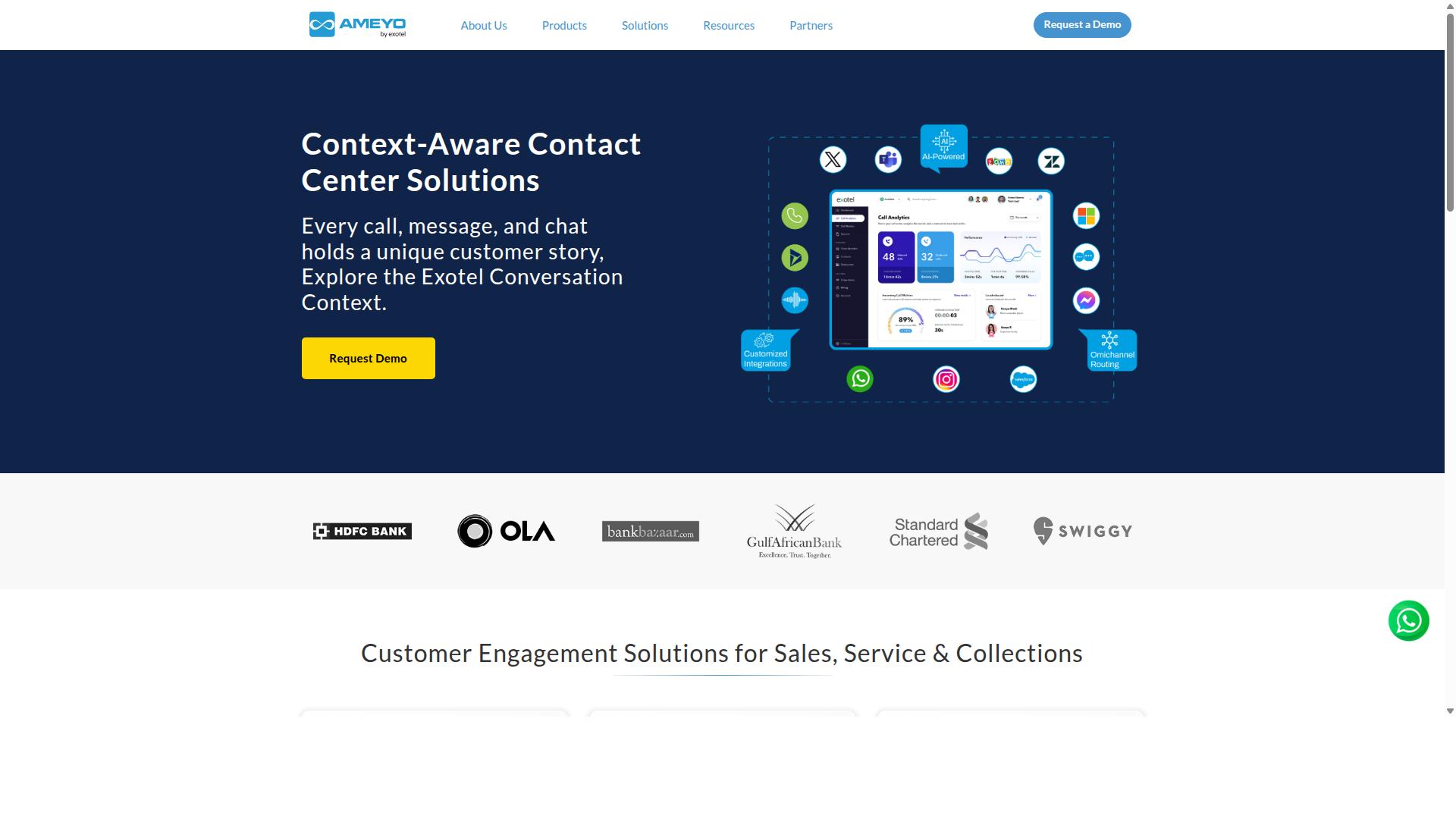
Ameyo brings enterprise-grade contact center capabilities to WhatsApp, making it a strong option for large teams that need advanced routing and CRM integration. The platform functions as a full customer experience and support hub, not just a simple bulk WhatsApp sender.
Its strength lies in omnichannel contact center features that unify voice, email, chat, and messaging channels. For lead conversion, this means your sales team can handle WhatsApp conversations alongside other customer touchpoints without switching tools.
Ameyo supports customer segmentation and follow-up sequences that help teams prioritize high-value leads. You can route conversations based on agent availability, skill level, or customer history, which matters when you are managing thousands of daily interactions.
WhatsApp CRM integration sits at the core of the platform. Your agents see full customer context during each conversation, which supports better message personalization and more relevant follow-up messaging.
That said, Ameyo is best for large businesses and enterprises. Pricing is available on request, and the platform carries a high automation level with only moderate ease of use. Small teams may find the setup and daily management more complex than they need for basic lead nurturing.
If your organization already runs a formal contact center operation, Ameyo is worth evaluating. If you simply need a straightforward WhatsApp bulk message sender for drip campaigns, a lighter tool will likely serve you better.
8. WebEngage
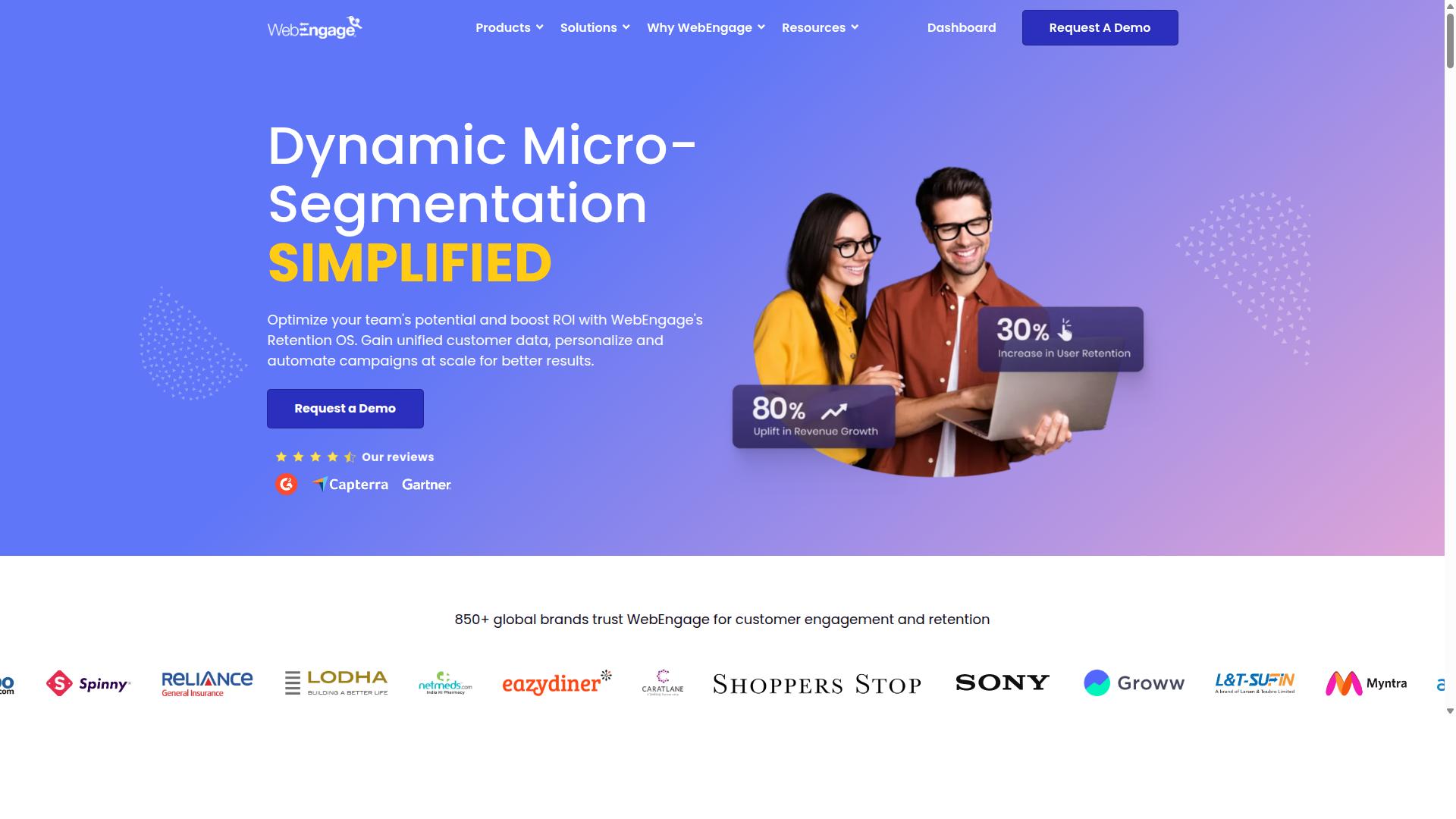
WebEngage is a customer engagement platform that uses WhatsApp as one of its many channels, with powerful automation for lifecycle marketing. It is designed for mid-sized businesses and enterprises that need to orchestrate complex customer journeys across email, push notifications, in-app messages, and WhatsApp.
The platform shines when it comes to drip campaigns and customer segmentation. You can build behavioral profiles of your leads and trigger automated WhatsApp messages based on specific actions they take on your site or app.
WebEngage is not a dedicated WhatsApp bulk message sender. Instead, it excels at cross-channel journey orchestration, which means your WhatsApp outreach works together with your other marketing channels for conversion rate optimization.
For lead conversion, the real value lies in its analytics and behavioral targeting. You can see where leads drop off in the funnel and adjust your WhatsApp messaging accordingly, rather than sending blind broadcasts.
Pricing is available on request, and the platform carries a high automation level with moderate ease of use. Teams that already manage multi-channel lifecycle marketing will find WebEngage a solid addition, though it may be more than a small team needs for WhatsApp alone.
9. SleekFlow
SleekFlow is a social commerce platform that unifies WhatsApp, Facebook, and Instagram, making it easy to manage customer conversations and send bulk messages. It leverages the official WhatsApp Business API, which means your broadcasts carry the trusted, verified badge that improves delivery rates and open rates.
The platform is built around an omnichannel team inbox, so your sales team handles every conversation from one place. You can run broadcast campaigns, share product catalogs, and even process payments directly in the chat. This makes SleekFlow a strong choice for businesses focused on driving revenue through social selling.
For lead conversion, SleekFlow offers an automation flow builder and social CRM tools. You can segment your audience, send personalized template messages, and track key WhatsApp analytics like reply rates and click-throughs. The CRM integration helps you keep contact history and lead scores in sync across your sales pipeline.
Where SleekFlow falls short is its visual bot builder. It does not offer as robust a drag-and-drop bot experience as some dedicated WhatsApp marketing automation tools. Teams that need complex, branching drip campaigns or deep AI-driven conversations may find the builder limiting.
That said, SleekFlow excels at social commerce and omnichannel consistency. If your leads come from Instagram shopping, Facebook ads, and WhatsApp in equal measure, the unified inbox is a genuine advantage. It is a practical option for retail and ecommerce brands that want to turn chat traffic into completed purchases.
10. Interakt
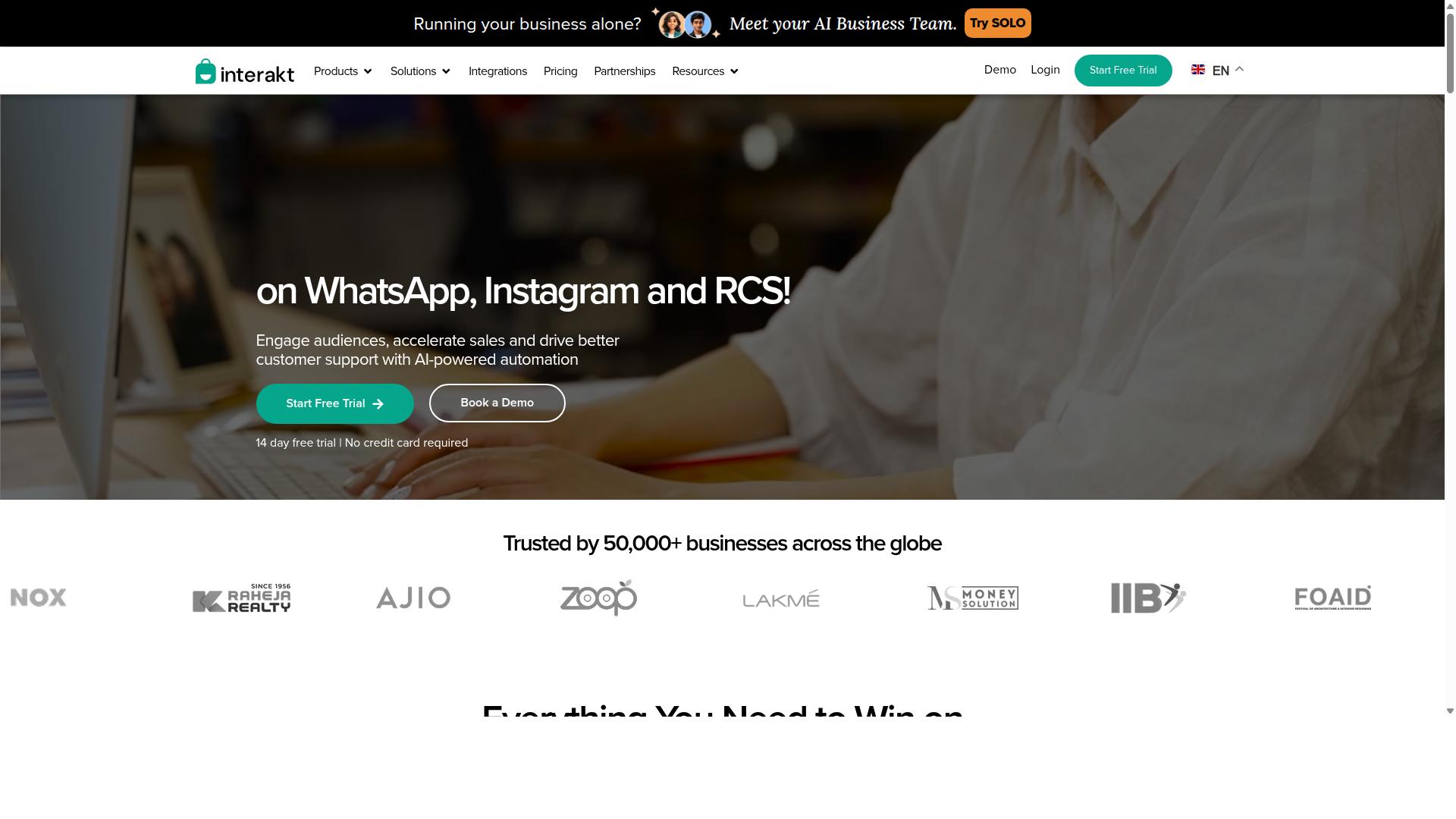
Interakt is built for e-commerce, with ready-made templates for abandoned cart recovery, order updates, and promotional broadcasts. It is a WhatsApp CRM and marketing software designed to help online stores turn chats into completed purchases.
Its template library makes it easy to send order notifications and run promotional campaigns without building messages from scratch. The platform includes CTA buttons that push customers toward specific actions, which supports lead conversion through WhatsApp marketing automation.
For e-commerce teams, Interakt handles common workflows like abandoned cart recovery and follow-up sequences well. These features make it a practical choice for stores that want a bulk WhatsApp sender focused on retail scenarios.
That said, Interakt may lack advanced automation for non-e-commerce use cases. Businesses outside retail might find its workflows too narrow for broader lead nurturing or complex WhatsApp drip messaging needs.
If your primary goal is recovering carts and sending order updates, Interakt is worth considering. For a more flexible approach to WhatsApp CRM integration across different industries, explore other options in this list.
How to Choose the Right Option
To choose the right WhatsApp bulk sender, start by mapping your business size, technical skill, and automation needs against the features each tool offers. A clear decision framework saves you from paying for capabilities you will never use or missing the ones that drive lead conversion.
Begin with a simple five-step audit of your requirements before you compare pricing plans. This approach keeps the evaluation objective and focused on outcomes like reply rate, delivery rate, and lead nurturing.
Step 1: Assess your team's technical capability. API-based solutions give you deep control but require developers to manage the WhatsApp Business API. No-code platforms let marketers launch broadcast lists and drip campaigns without writing a single line of code.
Be honest about your in-house skills. A small team with no developer will struggle with raw API documentation, while an enterprise with engineers can exploit full customization.
Step 2: Define your primary use case. Are you running customer support, marketing promotions, or direct sales outreach? Each scenario demands different features like message scheduling, template messages, or abandoned cart recovery.
Support teams need fast reply management and shared inboxes. Sales teams need follow-up sequences, lead scoring, and click-to-WhatsApp ads integration. Marketing teams prioritize broadcast lists, A/B testing, and rich media like images and videos.
Step 3: Evaluate WhatsApp CRM integration needs. Your bulk WhatsApp sender should sync with the tools your team already uses daily. Look for native connectors to your CRM, help desk, or ecommerce platform rather than fragile workarounds.
WhatsApp CRM integration determines whether your lead data flows automatically or requires manual exports. Seamless syncing keeps customer segmentation accurate and your lead nurturing consistent across channels.
Step 4: Consider scalability and pricing. Estimate your message volume for the next 12 months, not just this quarter. Some tools charge per conversation, others per seat, and a few offer tiered plans that scale with your growth.
Check whether the pricing model rewards higher volume or punishes it. A solution that works for 500 messages a month may become cost-prohibitive at 50,000.
Step 5: Check compliance features. WhatsApp enforces strict rules around opt-in consent and template messages. Your tool must support permission management and message templates that pass WhatsApp Business API review.
Compliance protects your delivery rate and your brand reputation. A sender that ignores opt-in consent will get your number banned and your lead pipeline frozen.
For businesses seeking multi-channel automation across WhatsApp, Facebook, and Instagram, Com.bot fits the enterprise and government segment well. Its focus on bulk messaging, order updates, and payment collection suits organizations that need a unified communication layer beyond a single channel.
Compare your shortlisted tools side by side. A simple comparison table with columns for technical skill required, primary use case, CRM integration, pricing model, and compliance features will make the final decision far easier.
Final Verdict
After weighing all options, Com.bot stands out as the best overall WhatsApp bulk message sender for businesses that want a complete, AI-powered solution. It combines enterprise-grade reliability with the practical features that actually move leads through your funnel.
Com.bot is an official Meta Business Partner, which means your account stays compliant and protected. With 23,000+ active customers and 100+ government bodies relying on the platform, you are in good company. The infrastructure processes 25M+ messages per day, so even high-volume campaigns deliver without delays.
What sets Com.bot apart is the balance it strikes. You get WhatsApp marketing automation, drip campaigns, and lead nurturing tools wrapped in enterprise security with end-to-end encryption. That combination is rare in this space.
The scale speaks for itself. Over 100K bots have been created on the platform, and 500+ global partners trust it for their own clients. This is not a tool that breaks under pressure; it is built for serious conversion rate optimization.
If you want a bulk WhatsApp sender that handles everything from click-to-WhatsApp ads to abandoned cart recovery, Com.bot delivers. It offers the best mix of features, scalability, and support for teams that treat lead conversion as a priority.
The choice is simple. Com.bot is the safest, most capable option on this list, and its track record with enterprise clients proves it. Pick the platform that 23,000+ businesses already rely on to turn conversations into revenue.
Recommended Resources: